
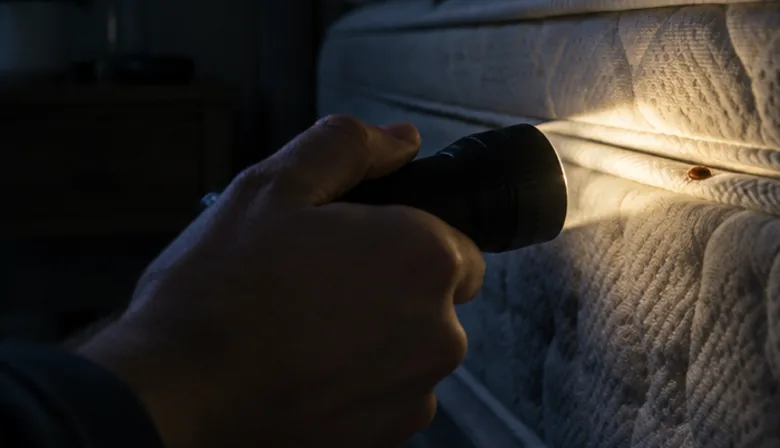
Mattress seam near the head of the bed
The seam and piping sit within a few centimetres of a sleeping person's head and breath, the main thing that draws bed bugs to feed.
Ten bed bugs are hiding in a real-life bedroom — in the exact kind of places they actually lurk during an infestation. Zoom in, follow the clues and see how many you spot.
Learn how to carry out your own bed bug inspection by playing this game.

You'll be inspecting the master bedroom
Bed Bugs Found: 0 / 10
Pictures are realistic illustrations created for this game, not photos from a customer's home.
Bed bugs are flat, about the size of an apple seed as adults, and spend most of their time pressed into narrow gaps close to where people sleep. They come out mainly at night to feed, then return to the same sheltered places. That is why most are found within a couple of metres of the bed, and why an inspection should start at the mattress and work outwards.
The seam and piping sit within a few centimetres of a sleeping person's head and breath, the main thing that draws bed bugs to feed.
The dark, undisturbed gap behind a headboard is right beside the pillows, and staples and fabric folds give bugs tight places to press into.
Bed bugs have flattened bodies that slip into joints as thin as a credit card, and frame joints are rarely cleaned or disturbed.
The underside of the mattress stays dark and is only a short walk from the sleeper, so bugs shelter there between feeds.
Divan bases have stapled fabric seams and hollow interiors that offer many protected crevices directly under the bed.
Bedside tables sit within arm's reach of the pillow; their joints and runners are dark, dry hiding places close to the host.
As infestations grow, bugs spread from the bed into nearby gaps such as the top of the skirting board behind the bed.
Picture frames close to the bed give a dark, flat refuge on the wall, typically found in more established infestations.
Folds and pleats in curtains near the sleeping area create sheltered pockets; bugs here usually mean the infestation is spreading.
A chair beside the bed is another resting place for people, and its seams and crevices make good secondary harbourages.
Socket and switch plates sit in gaps cut into the wall, so they are a warm, undisturbed void that bugs walk into as an infestation spreads beyond the bed.
The strip where carpet meets the floor is dark, undisturbed and runs between rooms, which makes it a common resting place for bugs moving to a new harbourage.