
- US EPA — Preparing for treatment against bed bugs
Explains why clearing, bagging and laundering items before treatment helps a treatment reach infested areas.
PREPARATION GUIDE
Preparing for Your Bed Bug Heat Treatment
You don’t have to face bed bugs alone. We’ll help you prepare, answer your questions and take care of the specialist heat treatment.
The preparation standard
Ready the day before. Preparation must be complete and ready the day before we arrive. If the property is not prepared, we will not carry out the treatment, and we cannot wait while it is completed.
Your booking deposit. A 20% deposit secures your date and is shown clearly before you pay. Where a treatment cannot go ahead because preparation was not complete, that deposit is retained to cover the day held for you. A further appointment must be arranged and a new 20% deposit paid to secure the new date. Deposits cannot be held, carried over or transferred to another day.
Where we have to cancel or rearrange, your deposit is refunded in full or moved with your booking. The deposit is retained only where the day was held for you and the treatment could not go ahead because the property was not prepared. Nothing on this page affects your statutory rights under UK consumer law.
Need a hand with the instructions? Call 0800 274 0156 before your treatment day.
One step at a time. We’re here to help.
We know bed bugs are upsetting. Work through one room at a time, at your own pace. These steps help the heat reach their hiding places; our specialists handle the treatment.
Unsure about anything? Call 0800 274 0156 — we’ll talk it through with you.
Keep removed items in the kitchen for our team to check. Follow the room-by-room steps below for belongings, beds and alarms.
Interactive checklist
Your preparation checklist
A room at a time, with our team here if you need us.
0 of 20 complete (0%)
Fire, safety & alarm systems
0/2Why alarms matter
- Rooms reach 60–65°C — heat and smoke sensors will trigger
- Wet sprinkler systems can activate and flood the property
- Monitored alarms may call out the fire service
- Never interfere with fire-safety systems yourself — your building manager must coordinate any arrangements
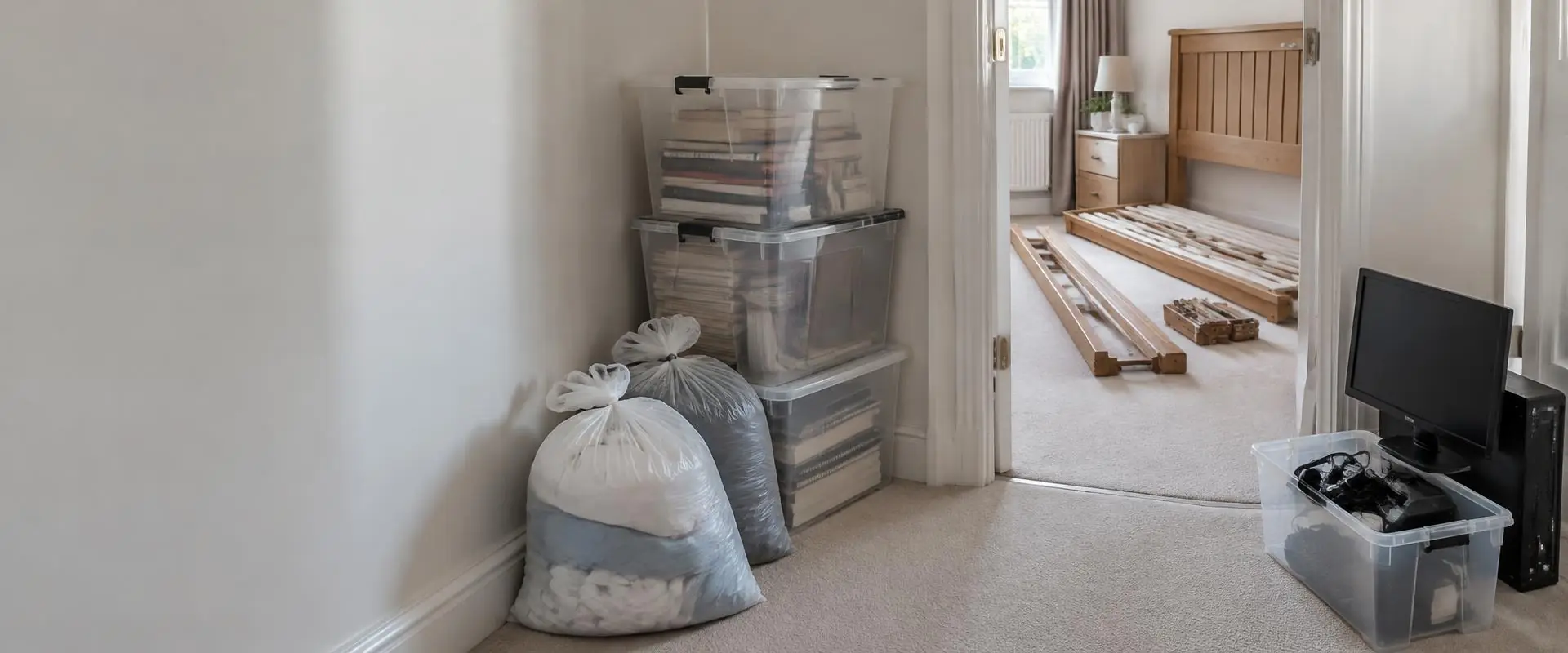
Remove from bedrooms and lounge — place in the kitchen
0/4Electronics, papers & books — remove from treated rooms
0/2Keep removed items contained
- Keep books sealed in their plastic boxes
- Tell our technicians where removed items are stored so they can advise on inspection and treatment
- Do not return removed items to treated rooms until our technicians advise it is safe
Bedroom — clothes & bedding
0/3Washing safely
- Use the hottest wash permitted by each fabric care label
- Ask us before your appointment about anything that cannot be hot-washed
Beds — empty storage & open up wooden frames
0/3No hidden storage left packed
- Ottoman compartments, bed drawers and the space beneath beds must all be empty
- Bag and hot-wash stored clothes using the steps above
- Leave space around suitable items and bed-frame parts for hot air to circulate
Furniture & mattresses — keep in the room
0/2Why these stay put
- Bed bugs hide in seams, frames and joints — heat must reach them in place
- Moving furniture can carry bed bugs into untreated rooms
- Electronics, books and loose papers must be removed as set out above
- Our technicians monitor temperatures throughout every room
Access & the day before
0/4Alarms, sprinklers & detectors — what you must do
Sprinkler systems
Sprinkler heads activate from heat alone and can flood the property. Any arrangements for the treatment zone must be coordinated with your building manager and carried out by authorised, competent personnel — never drain or disarm sprinklers yourself.
Heat detectors
Heat detectors are designed to trigger at the temperatures we reach. Your building manager must arrange for any necessary measures to be carried out by authorised, competent personnel with suitable fire-safety precautions.
Smoke detectors
Warm, moving air can cause false alarms. Agree any arrangements with your building manager or landlord — do not disconnect or cover detectors yourself.
Smart & monitored alarms
Tell your alarm company, landlord or building manager beforehand — monitored alarms may call out the fire service. Any changes must be made by authorised, competent personnel.
Speak to your building manager or landlord well before treatment. Never interfere with fire-safety systems yourself, and make sure every system is fully restored by authorised personnel as soon as treatment is finished.
Before your treatment day
Confirm your preparation
Once all 20 boxes are ticked, read the short note below, add your details and press the button.
Disclaimer & agreement
I have read and completed the preparation instructions. Our chemical-free heat treatment can damage heat-sensitive items such as candles, aerosols, vinyl, some plastics and plants. All pets must be out of the property.
Electronics, loose papers and books are out of treated rooms, books in sealed boxes. Bed storage and under-bed spaces are empty, wooden bed frames dismantled, and stored clothes and bedding bagged and hot-washed as labels allow.
Flat-pack, laminated and veneered furniture can soften or unstick in heat. I have removed heat-sensitive items and will ask the team about anything I am unsure of.
I will provide safe access for 4–6 hours and confirm my details are accurate. The 3-month guarantee is void, with no refund, if bed bugs are proven to be re-entering from a neighbouring property.
If you ask us to go ahead, or let our team begin, without confirming online, that counts as your full acceptance of it.
Before & after
How a prepared room should look
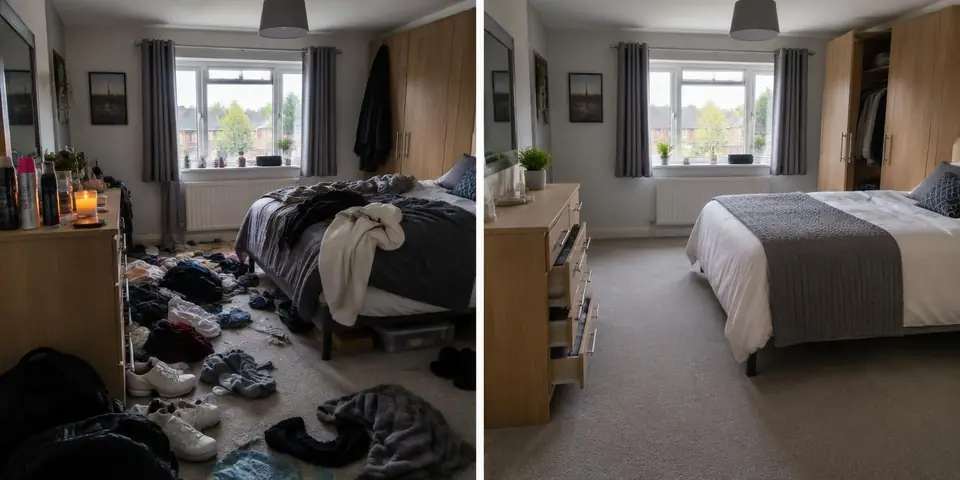 BeforeAfter
 BeforeAfter
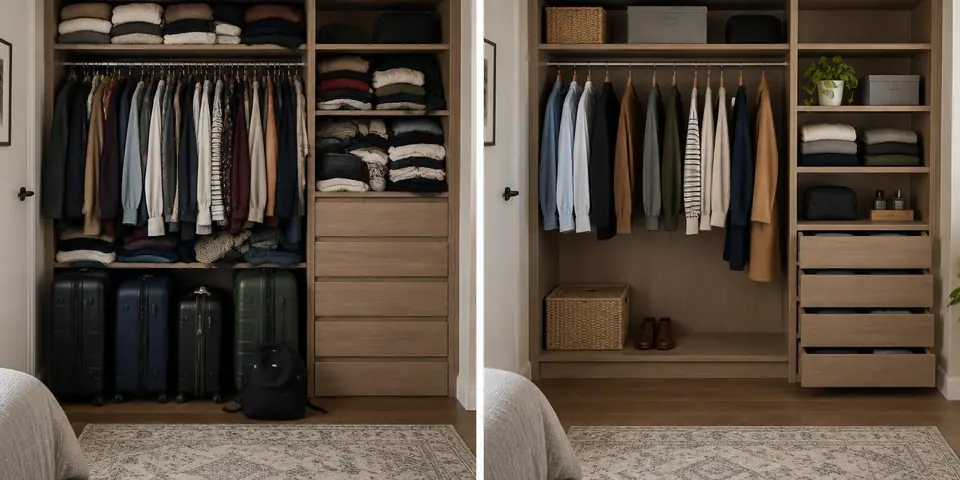 BeforeAfter
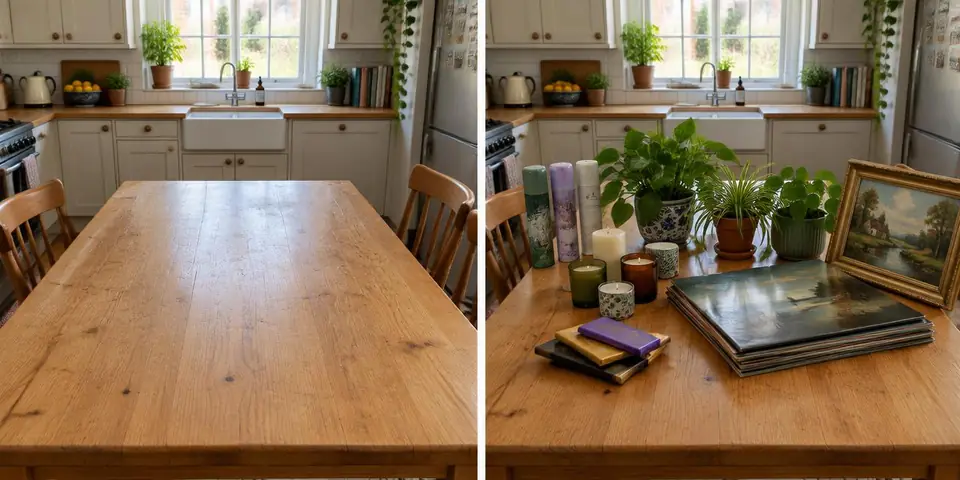 BeforeAfter
Important information
Industrial heat treatment is one of the most effective ways of eliminating bed bugs. However, thousands of household items, materials and finishes can react differently to heat, and it isn't possible to list every one.
We take every reasonable care and this guide helps minimise risk, but we cannot accept responsibility for damage to heat-sensitive items left in the treatment area. If you're unsure about an item, remove it before we arrive or ask us first.
Your 3-month written guarantee and its conditions are explained in full before booking.
60–65°CLethal to bugs and eggs
4–6 hoursTypical treatment time
Air moversHeat reaches every corner
Ask firstCall 0800 274 0156
Things to be aware of
Most properties are treated without any problems. On rare occasions, older or damaged materials may react:
- Existing hairline cracks in plaster or ceilings may become slightly more noticeable.
- Older or loose plaster may develop small cracks.
- Previously damaged or loose paint may flake.
- Decorators' caulk around skirting boards or door frames may separate slightly.
- Loose wallpaper edges or seams may lift.
- Some silicone sealants may soften or separate.
- Natural wood may expand or contract slightly before returning to normal.
- Poorly fitted laminate or engineered flooring may move slightly.
- Veneered, MDF or flat-pack furniture with ageing adhesives may lift at the edges.
- Some plastic or faux-wood blinds may be affected by prolonged heat.
References & Further Reading
- US EPA — Safety issues in controlling bed bugs
Covers the safety risks of improvised control methods, including fire hazards and misuse of products at home.
- Luton Borough Council — Preparing for a bed bug appointment
A UK council example showing why rooms must be prepared and accessible before a pest-control visit. Its instructions apply to the council’s own service and do not replace our heat-treatment preparation checklist.
Independent sources for general information; they do not endorse any company. See all research & trusted sources
Not sure about an item?
Our specialists will happily talk you through your preparation — 7am–10pm, seven days a week.