
The short answer
Laboratory research has found that bed bug eggs are more heat tolerant than adults, and that brief exposure to temperatures in the mid-50s °C kills eggs, while adults die at somewhat lower temperatures with sustained exposure (Kells & Goblirsch, 2011).
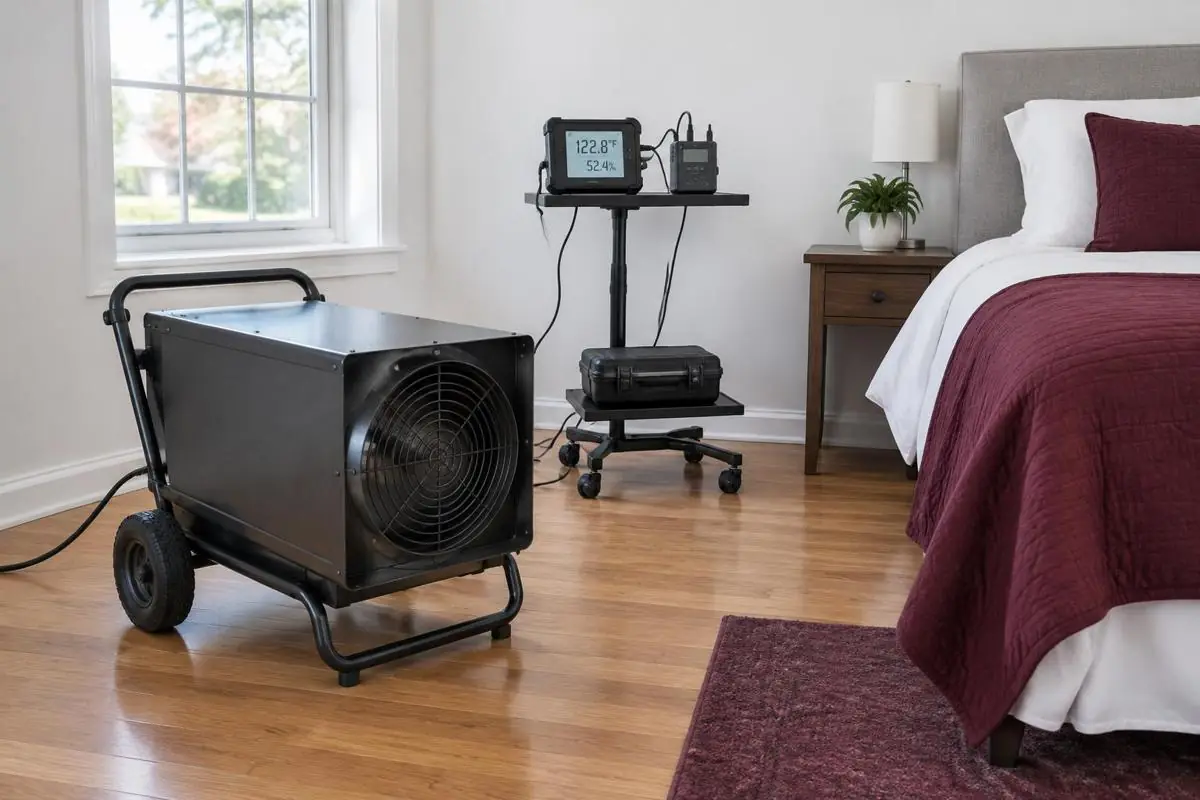
Our treatments raise rooms to approximately 60–65°C. Working above the lethal range gives a margin so that heat still reaches lethal levels deep inside mattresses, sofas, bed frames and crevices, which warm more slowly than the air around them.
Why time matters as much as temperature
Killing bed bugs depends on a combination of temperature and exposure time. A quick blast of hot air does not reliably heat the inside of a mattress seam or the joints of a bed frame. That is why professional treatment holds the temperature for an extended period rather than switching off as soon as the room feels hot.
We monitor temperatures in the places bed bugs hide, not just the air in the middle of the room, so we know when those areas have been brought up to temperature.
Does heat treatment kill bed bug eggs?
Yes — when the eggs themselves reach a lethal temperature for long enough. Eggs are glued into seams, cracks and fabric folds and cannot be removed by vacuuming or wiping alone. Because heat reaches these places directly, a properly carried out heat treatment targets every life stage at the same time, including eggs.
This is one reason heat is used instead of products that only affect bugs which come into contact with them.
Can bed bugs become resistant to heat?
In repeated-exposure experiments, bed bugs showed only a limited ability to develop heat resistance (Ashbrook et al., 2019). By contrast, many bed bug populations have developed resistance to some insecticides (Dang et al., 2017).
No treatment is infallible. Results still depend on preparation, heat penetration and exposure time, which is why we assess every property and ask customers to follow our preparation checklist.
Why DIY heating is not the same
Hairdryers, fan heaters, steamers or turning up the central heating cannot safely raise a whole room and its furniture to lethal temperatures, and they can drive bed bugs deeper into walls or into other rooms. Some methods also create a real fire risk.
Professional heat treatment uses dedicated equipment, controlled airflow and continuous monitoring to heat the space evenly and safely.