Decluttering without spreading bed bugs between rooms means controlling where belongings go, not simply clearing surfaces as quickly as possible. A crowded room can make inspection and treatment preparation harder, but carrying loose bedding, clothing or furniture into another room can create a different problem. The useful question is not “How much can we throw away?” but “What needs to move, how will it be contained, and where will it stop?” This guide sets out a household workflow built around a simple room map, agreed holding points and written instructions that everyone can follow. It does not replace identification, a treatment plan or the provider’s preparation requirements. Instead, it helps you organise belongings without turning the rest of the home into an overflow area, and without assuming that all furniture must be discarded.
1. Decide what genuinely needs to move before touching it
Begin with the purpose of the clearance. Are you making a route to the bed, exposing an area for inspection, or following specific preparation instructions? Those are different tasks. If nobody can explain why an item needs moving, leave it where it is while you clarify the plan. Less movement means fewer opportunities to lose track of belongings.
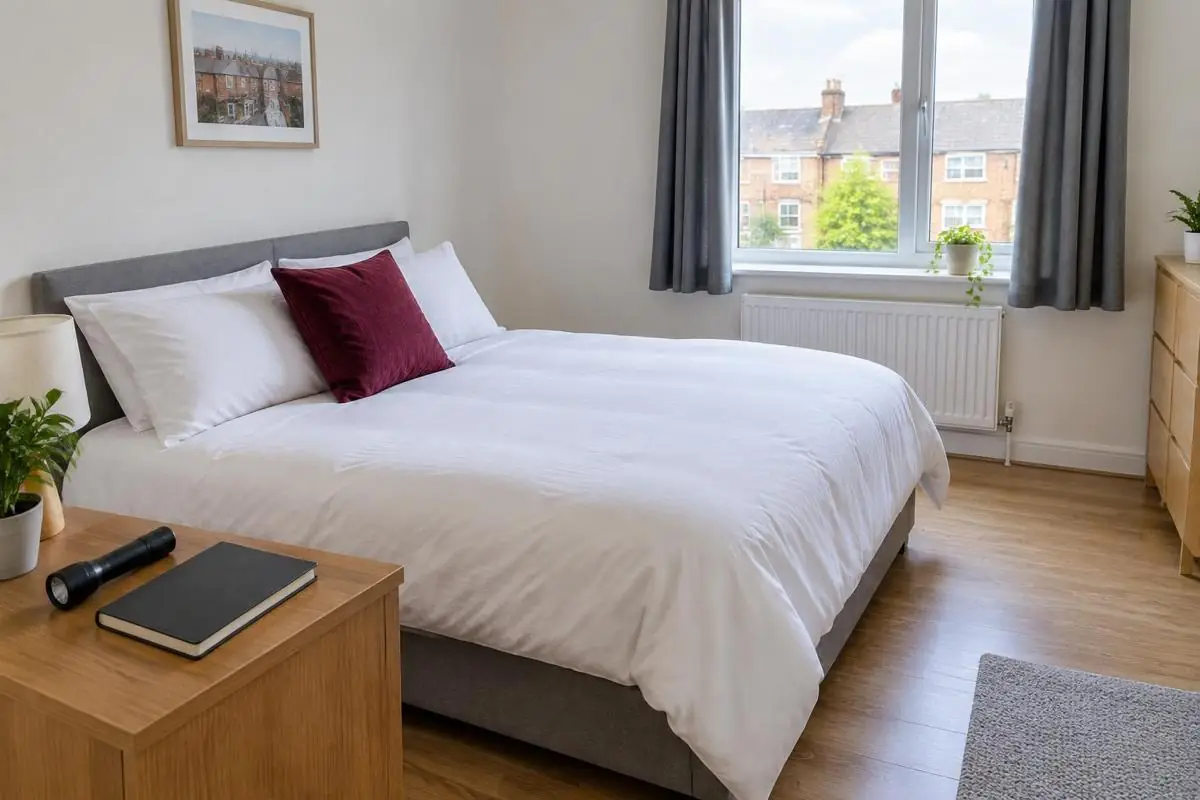
Do not treat every object in the room as confirmed evidence of bed bugs. The NHS notes that bites alone cannot identify them, and hiding places can include bedframes, clothing, pictures and loose wallpaper. That supports a careful approach to the whole room, not a rushed decision to empty cupboards or strip everything from the walls.
Ask the treatment provider which areas need access and which belongings should remain in place. If assessment has not happened, prioritise planning rather than wholesale clearance. Set a stopping rule: whenever an item has no agreed destination or handling instruction, pause that task. A temporarily unfinished corner is preferable to an undocumented pile in another bedroom.
2. Draw a room map that records destinations, not just furniture
Sketch the relevant rooms on paper; an accurate architectural drawing is unnecessary. Mark doors, the bed, large furniture and existing piles. Give each room a short name that everyone uses consistently, such as Front Bedroom rather than alternating between different occupants’ names. Include the hallway if belongings would pass through it during the planned clearance work.
Add the proposed position of a holding area within the room being sorted, subject to the provider’s instructions. Mark any route that must stay clear. Avoid labelling another bedroom “clean storage” simply because no signs have been noticed there. A room label should describe its role, not promise a status that has not been established.
Use arrows only for movements that have actually been agreed. Beside each arrow, write what may travel, its container label and its destination. If there is no suitable holding space, that is a question for the provider, not a reason to improvise in the lounge. Date the map and keep one current version available to everyone.
3. Create a contained sorting point inside the working room
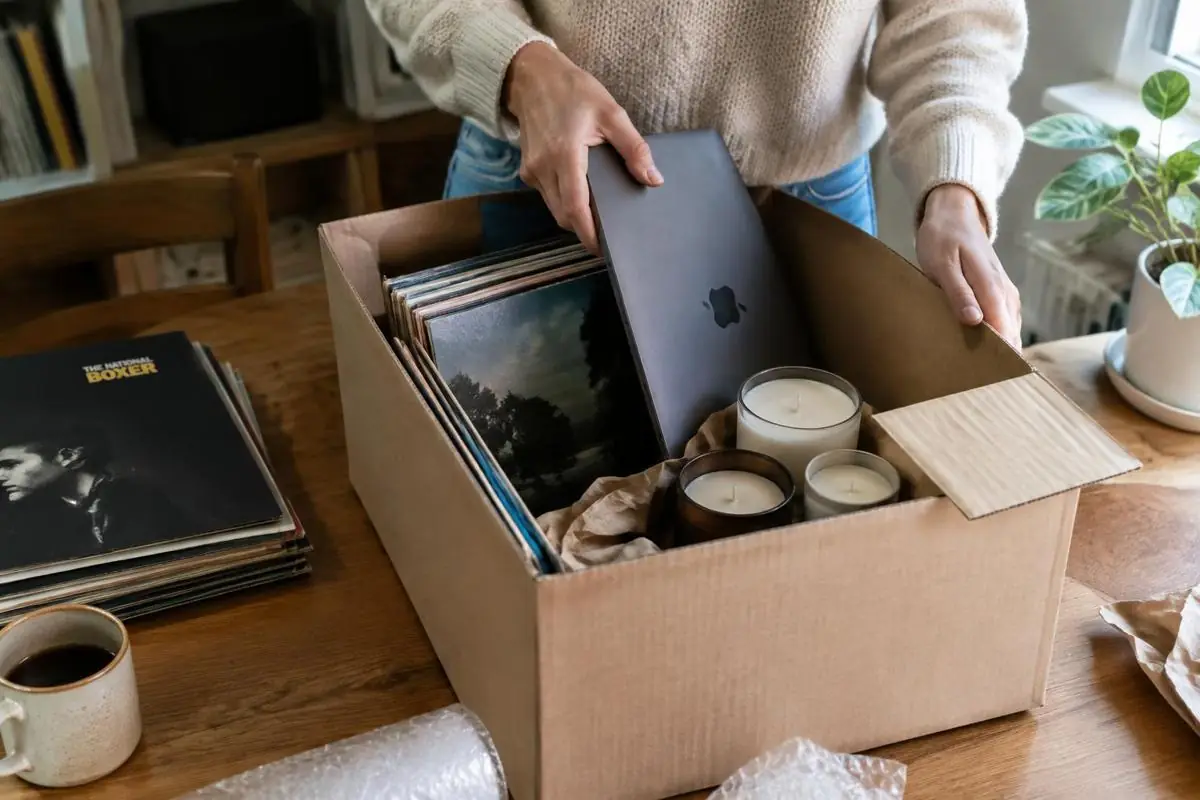
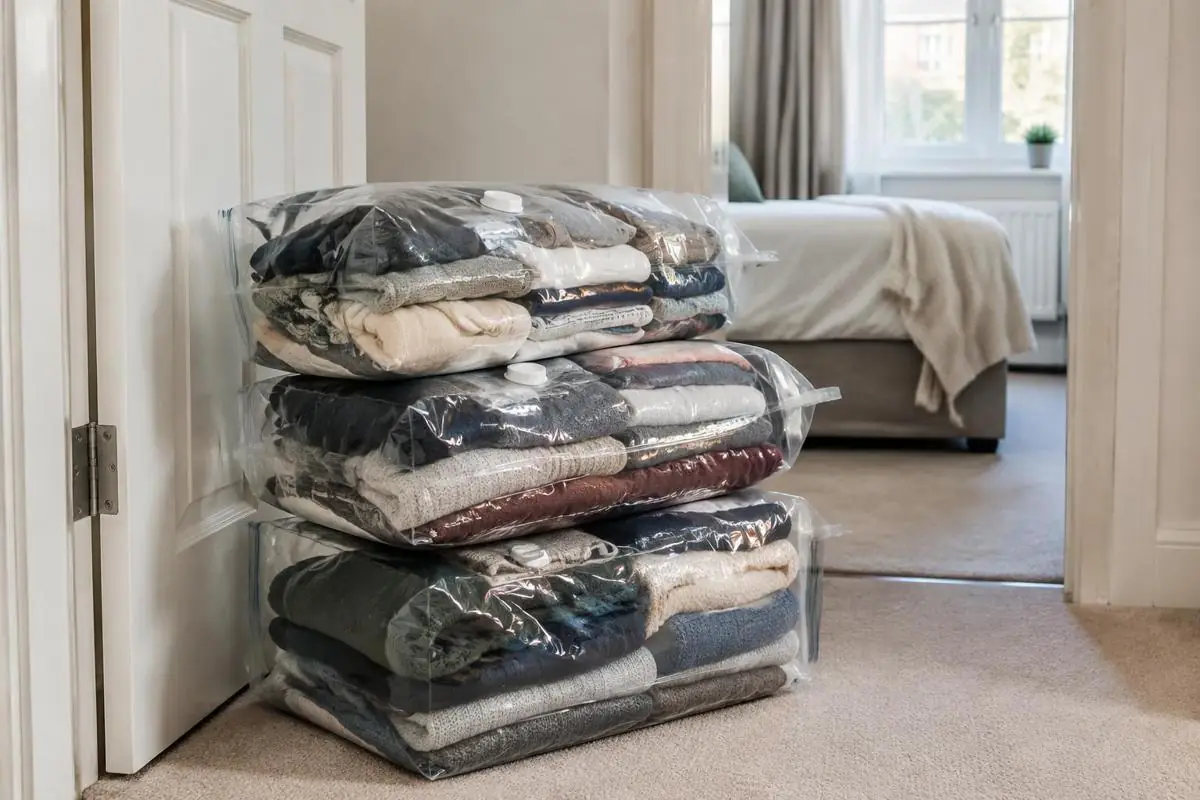
Bring suitable bags or closable containers, labels and a pen to the working room before starting. Choose containers that can close securely without being overfilled or damaged by their contents. The immediate aim is containment and traceability, not treatment. Putting something into a bag does not establish that it is free of bed bugs or ready for reuse.
Work on a manageable group of belongings rather than tipping an entire wardrobe onto the floor. Keep items within the agreed sorting area and avoid shaking clothing or bedding through the room. Close each container before moving on to another group. This makes it easier to stop safely if the task is interrupted or instructions change.
Label containers before their original location becomes uncertain. A useful label records the room, a plain description of the contents and the next decision required. Keep containers away from doorways and essential access routes. Ask the provider whether they should remain closed, where they should stand and how they will fit into the eventual treatment plan.
Continue the topic: What to expect on bed bug heat treatment day
4. Make every journey between rooms an agreed exception
The default should be to keep belongings in their room of origin until a movement is necessary and planned. Do not carry loose piles to a spare bed, sofa or landing to create temporary working space. That merely relocates the uncertainty and can make it harder to explain what was originally present in each room.
When movement is required, agree the route and destination first. Close the container before it leaves the room, check that it can be carried without tearing or spilling, and take it directly to the designated position. Do not open it along the way to retrieve an item or divide the contents between several different household storage spaces.
Record the move on the room map or an accompanying list. If a container splits or opens unexpectedly, stop rather than continuing the journey with loose contents. Keep others from handling the spill while you arrange secure containment and ask the provider what further action is appropriate. Record the location honestly; an accurate account is more useful than reassurance.
5. Separate sorting decisions from treatment decisions
Use simple decision groups: keep in place, contain pending advice, and consider for disposal. These describe what the household should do next; they do not mean “infested”, “safe” or “treated”. Avoid a “clean” category unless there is a clear, agreed basis for using it. Otherwise someone may unpack a container because its label sounds reassuring.
Keep essential belongings identifiable so nobody has to rummage through multiple bags later. Before containing everyday clothing or frequently needed items, ask how access should be managed under the preparation plan. Do not create an improvised exemption by transferring those items uncontained to another bedroom. Practical needs should be raised early, while the layout can still be adjusted.
Cleaning and decluttering can support access and organisation, but neither alone guarantees removal. Equally, a closed bag is not a treatment method by itself. Keep any proposed cleaning or treatment step separate on the written list, with instructions still needed clearly marked. This prevents an ordinary sorting task from quietly becoming an unsupported claim that something has been dealt with.
6. Keep furniture unless there is a specific reason to discard it
Finding or suspecting bed bugs does not automatically mean every bed, wardrobe and sofa must go. Ask whether an item can remain within the proposed treatment plan before arranging removal. Disposal is a separate decision involving condition, practical handling and professional advice, rather than a compulsory first stage of making the room ready for inspection or treatment.
Large furniture creates a particular movement problem because it cannot simply be placed in an ordinary bag. Do not drag it through the home to inspect it elsewhere or leave it in a communal corridor while deciding. Tell the provider its size, location and the access difficulty, then ask what containment or handling arrangements are needed.
If disposal is recommended or chosen, agree the route, containment and collection arrangements before moving the item. Ask the waste service how potentially affected furniture should be presented, rather than assuming standard collection instructions cover it. Do not sell, donate or offer it for reuse without disclosing the concern. Buying replacements before the plan is settled can create further handling decisions.
For a property-specific assessment, see our bed bug heat treatment in Suffolk. Share your postcode and property details so the team can confirm coverage and availability.
7. Write household instructions that survive a change of helper
A verbal request to “tidy the bedroom” leaves too much open to interpretation. Write a short instruction sheet naming the working room, the person coordinating the task and the permitted actions. Attach the current room map. Make clear that nobody should independently move bags, unpack containers or remove furniture because they think they are helping with the clearance.
Use direct wording tied to the actual layout: “Keep labelled containers in the agreed holding area. Do not put belongings on beds in other rooms. Ask the coordinator before anything crosses the doorway.” Add the provider’s relevant instructions without paraphrasing away important conditions. Where advice is unclear or conflicts with the household plan, pause and obtain clarification.
Give each helper a defined task, such as labelling containers or updating the movement list, rather than letting everyone sort everywhere. Include a clear stopping point and a place to record unfinished work. Anyone joining later should read the sheet before starting. This is especially useful when household members are working different hours or someone helps for only part of the day.
8. Plan interruptions, everyday access and changes of mind
A workable clearance plan must survive the doorbell, a meal break or an urgent need for something already packed. Before starting, decide where closed containers will remain during interruptions and who can authorise reopening them. Keep essential routes usable. Do not leave an open sorting pile for another household member to finish without instructions or an agreed handover.
If something is needed from a container, return to the agreed handling process rather than opening it in whichever room happens to be convenient. Record any change of destination and close it again afterwards. Repeated requests for packed items indicate that the plan needs revising; they are not a reason to abandon containment for the rest of the task.
Where children, visitors or others might move belongings unknowingly, explain the practical boundary calmly: these containers are awaiting instructions and should stay closed. Avoid frightening labels or blame. If the household cannot maintain the proposed arrangement, tell the provider before continuing. A smaller, clearly managed clearance may be more workable than a large sorting exercise nobody can keep organised.
Related practical reading: Monitoring after heat treatment: signs, records and next steps
9. Hand over the map before treatment preparation changes
Send or show the provider the room map and movement list before making further changes for treatment. Explain which containers remain in their original rooms, which have moved and which furniture decisions are unresolved. Include any accidental opening or temporary storage elsewhere. These details allow the provider to assess the actual arrangement rather than an assumed version of it.
Ask specific questions: must these bags stay closed until your team arrives? Will their contents need a different arrangement? Should this furniture remain where it is? Who will move bulky items if movement is necessary? Do not assume that a sensible containment arrangement automatically meets a heat treatment plan; preparation and access requirements need to be confirmed for the property.
Professional heat requires controlled monitoring; the EPA’s technical guidance warns that household heating is not reliable and advises against DIY space-heater treatment. Those are US technical references, not UK legal requirements. Do not try to compensate for tightly packed belongings by heating the room yourself. Resolve packing and layout questions with the provider, and update the written household instructions accordingly.
10. Finish with a checked inventory and a short question list
End the session by checking the room against the map. Are containers closed and labelled? Has anything crossed a doorway without being recorded? Are access routes clear, and does every unresolved item have a next decision rather than an improvised destination? Write down what remains unfinished. The aim is a controlled handover, not a room that merely looks empty.
Prepare a short enquiry covering the rooms involved, access limitations, contained belongings and furniture you hope to retain. For a Suffolk service enquiry, or to discuss another location, Bed Bug Heat Control UK can be contacted on 0800 274 0156 or info@bedbugheatcontroluk.co.uk, 7am–10pm Monday–Sunday. Explain that you need property-specific advice about clearance and containment before making any further moves between rooms.
An enquiry is not a booking, and the quote is property-specific. If considering treatment, ask how your layout affects preparation and whether the single-day process is suitable following assessment. Request the full coverage and conditions of the three-month written guarantee before booking. Until instructions are confirmed, keep the agreed boundaries in place and make the map, labels and movement record available.
Sources & further guidance
General information, not a diagnosis, medical advice or legal advice. Research and US EPA references provide technical background, not UK law, and do not endorse our company. Your property assessment and the team’s written preparation instructions take priority.