
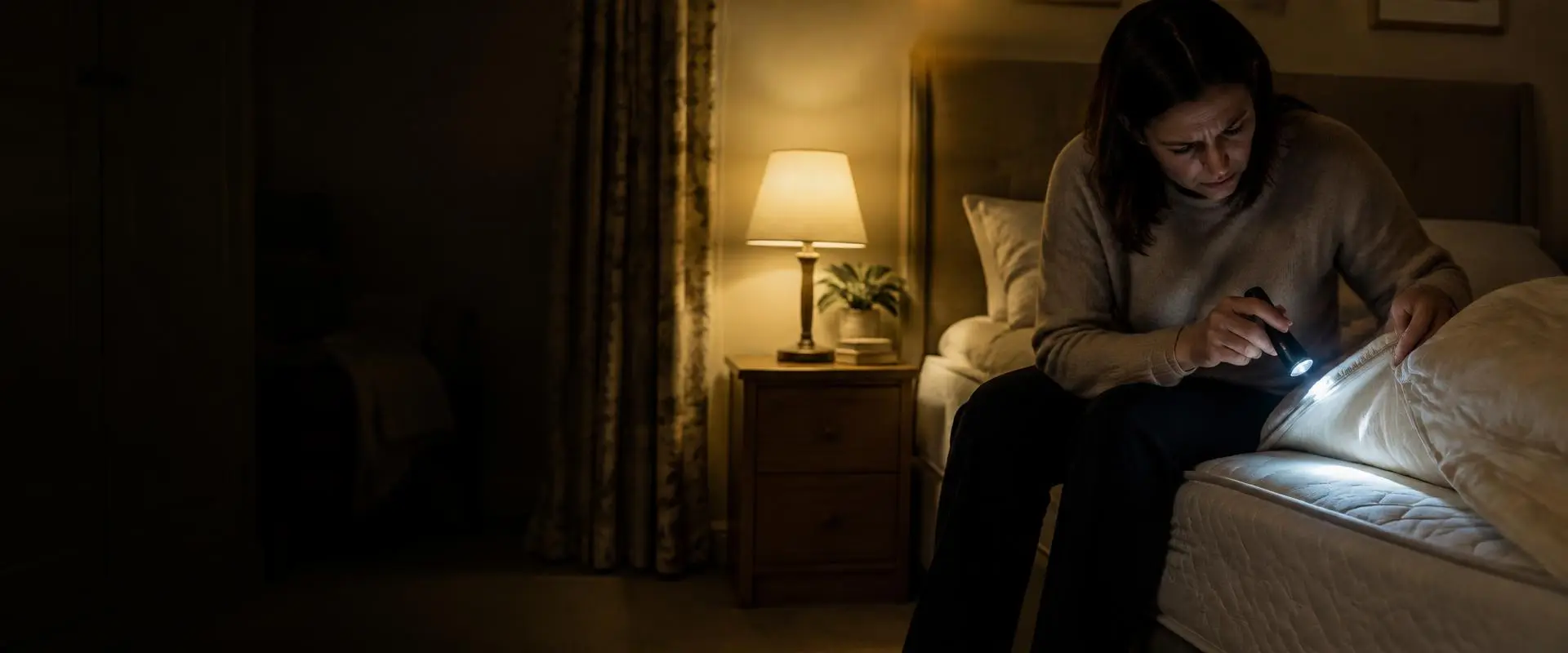
Why you may not see them
Bed bugs feed mostly in the early hours, usually for only a few minutes, and then crawl back into tight gaps. Adults are about the size of an apple seed and flat enough to fit into a crack the thickness of a bank card. Young bed bugs and eggs are smaller still and pale in colour.
In the early stages of an infestation there may only be a handful of insects, so it is normal to have bites for a while before you ever spot a live one. Not finding a bed bug does not rule them out.
Where to check during the day
Use a bright torch and look slowly, starting closest to where you sleep:
- The piping, seams and label of the mattress, and the corners of the box base or divan.
- Joints, screw holes and slats of the bed frame, and behind or inside the headboard.
- Bedside tables — drawer runners, corners and the underside.
- Skirting boards, carpet edges, plug sockets and loose wallpaper near the bed.
- Sofas and armchairs where anyone naps — cushion seams and under the frame.
Signs that point to bed bugs
Even without a live insect, these clues are strong evidence: small dark spots (droppings) on seams and slats, tiny rust-coloured marks on sheets, pale shed skins, and clusters or lines of bites on skin that was uncovered while you slept.
Our homepage diagnosis checklist walks through these signs one at a time, and our blog guides show where bed bugs hide in more detail.
What else can cause bites at night
Bites alone can’t confirm bed bugs. The NHS notes that bites from different insects can look very similar, and some people react to bed bug bites while others don’t react at all. Fleas from pets, mosquitoes in summer, mites, or skin conditions such as hives or dermatitis can all cause itchy marks.
If a rash spreads, blisters, looks infected or you feel unwell, speak to a pharmacist, GP or NHS 111. We deal with the bed bugs — not medical advice.
What not to do while you check
Try not to move to another bedroom or the sofa. Bed bugs follow people, and moving around can spread them into rooms that were clear. Avoid shop-bought sprays and foggers too — they can push bed bugs deeper into walls and furniture and make them harder to find.
When to call us
If you have found any of the signs above, or the bites keep coming and you can’t rule out other causes, call freephone 0800 274 0156, 7am–10pm, Monday to Sunday. Describe what you have seen and we will tell you honestly whether it sounds like bed bugs, and give you a free quote for heat treatment if it does.