Bed bug prevention in shared spaces and everyday travel Everyday prevention should make ordinary life easier, not turn every journey, visit or shared seat into a source of alarm. For UK households, a useful approach is to pay attention to belongings, distinguish a genuine finding from a worry, and know what to do when evidence deserves checking. Bites alone cannot identify bed bugs, and using a shared space is not itself evidence that you have brought them home. This guide focuses on manageable decisions around bags, coats, borrowed items and shared storage, rather than detailed inspections or treatment instructions. The aim is a routine you can sustain: keep track of possessions, avoid unnecessary movement of suspect items, and communicate clearly when something credible is found. Stronger precautions should follow stronger evidence, not simply the fact that other people have used a place.
1. Set an evidence threshold before changing your routine
Start with a distinction: being somewhere that other people use is different from finding something that may be a bed bug. A bus journey, office meeting or afternoon in a waiting room does not establish exposure. Without a specific finding or relevant notification, there is no reason to treat every possession as suspect.
Move from ordinary awareness to a targeted response when there is something concrete to assess: a visible insect on a belonging, for example, or a report of confirmed bed bugs in the particular area you used. Neither automatically proves that your home is affected. Both provide a reason to ask more precise questions.
Agree this threshold with your household before anxiety starts driving decisions. Ask, “What have we actually seen, and which item or place does it concern?” That question keeps the response bounded. Avoid deciding that every room, coat and journey needs attention because one person has unexplained marks on their skin; bites alone cannot settle identification or establish where any contact occurred.
2. Give bags and coats a deliberate place
Make belongings easy to account for when you arrive somewhere shared. Use an available designated storage place rather than scattering a coat, scarf and open bag across several seats. This is a practical organisational habit, not a promise of protection. No ordinary hook, locker or luggage rack should be described as automatically bed bug proof.
Keep bags closed when you are not using them, and take out only what you need. Avoid adding unnecessary loose items to shared piles. The benefit is a simpler chain of handling: if a concern later arises, you can identify what was where rather than trying to reconstruct several overlapping heaps of possessions.
For families, agree one straightforward instruction that children can follow, such as keeping spare clothing inside their own bag. Do not ask them to assess insects or police other people's belongings. Adults can manage any reported concern. A routine that works on an ordinary school morning is more useful than an elaborate ritual that nobody can realistically maintain.
3. Keep commuting precautions small and repeatable
On public transport, focus on your own belongings rather than attempting to inspect the vehicle. Keep track of bags and collect everything when leaving. Upholstery, a crowded carriage or another passenger's appearance is not evidence of bed bugs. Avoid assumptions about people or cleanliness when deciding whether there is anything specific to investigate.
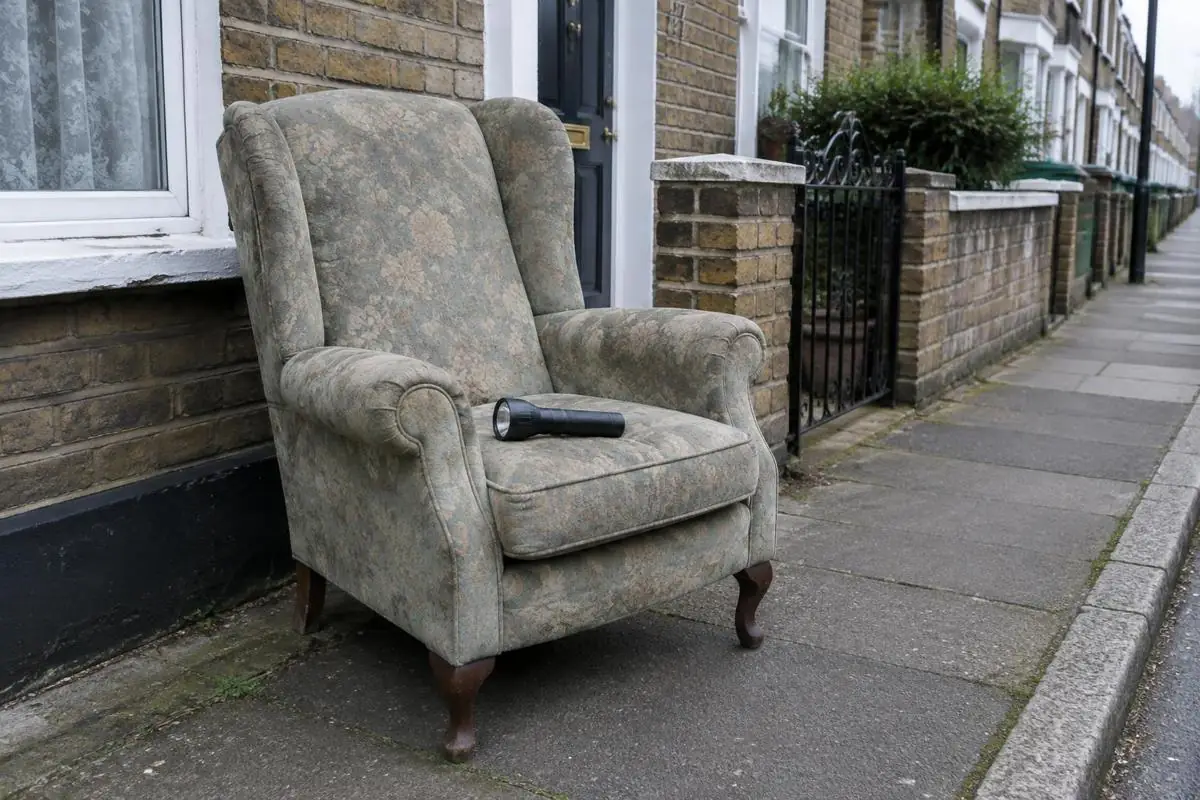
If you notice an insect on your bag, resist brushing it onto a seat or someone else's possessions. Where feasible, photograph it without moving it around. If it can be safely secured in a closed container, that may preserve something for identification. Do not confidently label an unfamiliar insect from a fleeting glimpse.
A specific observation warrants a specific report to the operator: the service, approximate time, location and what you saw. Describe an unidentified insect as unidentified. Once home, concentrate on the belonging involved rather than unloading everything across beds and sofas. If there was no observation or relevant report, ordinary arrival routines need not become a daily decontamination exercise.
Continue the topic: Bed bug heat treatment versus sprays: making an informed choice
4. Handle workplace and shared-storage reports precisely
In offices, communal changing areas or other shared facilities, the first useful question is what the report actually means. Was an insect identified, or has someone reported bites? Which storage area or room is involved? A clear distinction between suspicion and confirmation helps people take sensible action without treating the whole premises as affected.
If your belongings were in the area concerned, ask the person managing the response what you should do before moving them. Explain which items are yours and where they were stored. Avoid taking a communal pile home to sort, or moving potentially affected bags into another shared cupboard merely to get them out of sight.
Keep communication factual and private where possible. A suitable message is, “My coat was in that cupboard this morning; should it remain there while the finding is assessed?” That is more useful than circulating speculation about who introduced the problem. Ask who will provide updates, and whether instructions apply to a defined group of belongings or a wider area.
5. Discuss visits without blaming the visitor
A visit from someone who has mentioned a bed bug concern calls for a conversation, not an assumption that they or all their possessions are affected. Ask whether there is a confirmed finding and whether they have been given advice about moving belongings. Keep the discussion about practical arrangements rather than personal habits or household cleanliness.
Where there is credible evidence involving items they intended to bring, consider postponing the transfer of those items until advice is available. You can separate that decision from the social relationship. Explain the boundary plainly: “Let's leave the overnight bag out of today's plans while you check what the professional recommends for it.”
Do not demand that a guest spray belongings, improvise heating or carry out an unverified cleaning ritual at your door. Those actions are not a substitute for assessment. If a visitor later reports a confirmed problem, establish dates and relevant belongings first. A retrospective notification is information to evaluate, not proof that your own home now needs treatment.
6. Make borrowed-item handovers easy to trace
Borrowed bags, clothing and other portable belongings deserve a clear handover, especially when several households share them. Know what you have received and keep the contents together until you have put them away. This is not a call to reject borrowing. It makes any later query easier to answer without involving unrelated household possessions.
If the lender reports a credible concern before collection, pause and ask whether the particular item has been assessed. Do not assume that an item is cleared because it looks clean or has been wiped down. Equally, do not infer that every possession from that household is affected. Decisions should follow information about the items involved.
If you find something concerning after receipt, avoid passing the item straight on to the next borrower. Keep it separate and seek identification or handling advice. Tell the lender what you observed, without presenting a suspicion as a confirmed infestation. Cleaning alone cannot guarantee removal, so do not offer reassurance based solely on having vacuumed or washed something.
For a property-specific assessment, see our bed bug heat treatment in Cambridgeshire. Share your postcode and property details so the team can confirm coverage and availability.
7. Use a bounded arrival routine at home
For an ordinary day out with no specific concern, put bags and coats away as usual. Prevention does not require a full inspection after every shopping trip or appointment. Choose a practical place for everyday bags so they remain organised, but do not turn that spot into a supposed protective barrier or a substitute for evidence.
After a credible finding, pause before emptying the relevant bag throughout the house. Identify which belongings were actually involved. If appropriate for the item, use a securely closed bag or container as temporary containment while you obtain advice. Keep it separate from items in use, and explain to others that it should not be opened casually.
Containment is a holding measure, not treatment, and it does not establish that bed bugs are present. Avoid repeatedly reopening the package to reassure yourself. Ask for advice tailored to its contents, particularly where fragile or heat-sensitive belongings are involved. A focused response to suspected exposure is more useful than applying an improvised process to everything brought home.
8. Preserve useful evidence, not a trail of moved items
When you find a possible bed bug, record the observation before tidying it away. Note the date, exact place and item involved; take a clear photograph if possible. The NHS describes adults as approximately 5mm, but size alone cannot confirm identification. A specimen or usable image gives an assessor more to work with than a general description.
Keep your account separate from your interpretation. “Small insect found beside the zip of my work bag” records an observation; “the office has infested our house” asserts conclusions the observation does not support. Mention any relevant notification, but avoid filling gaps with assumptions about the source. Different pieces of information may need checking independently.
Seek competent identification or pest-control assessment when evidence remains credible. Ask what to leave undisturbed and how to handle the item meanwhile. Do not carry an open suspect bag from room to room to show people. If an image is inconclusive, acknowledge that uncertainty rather than treating either a confident guess or an unclear photograph as a final answer.
Related practical reading: How professional bed bug heat treatment works
9. Avoid turning a precaution into a DIY treatment
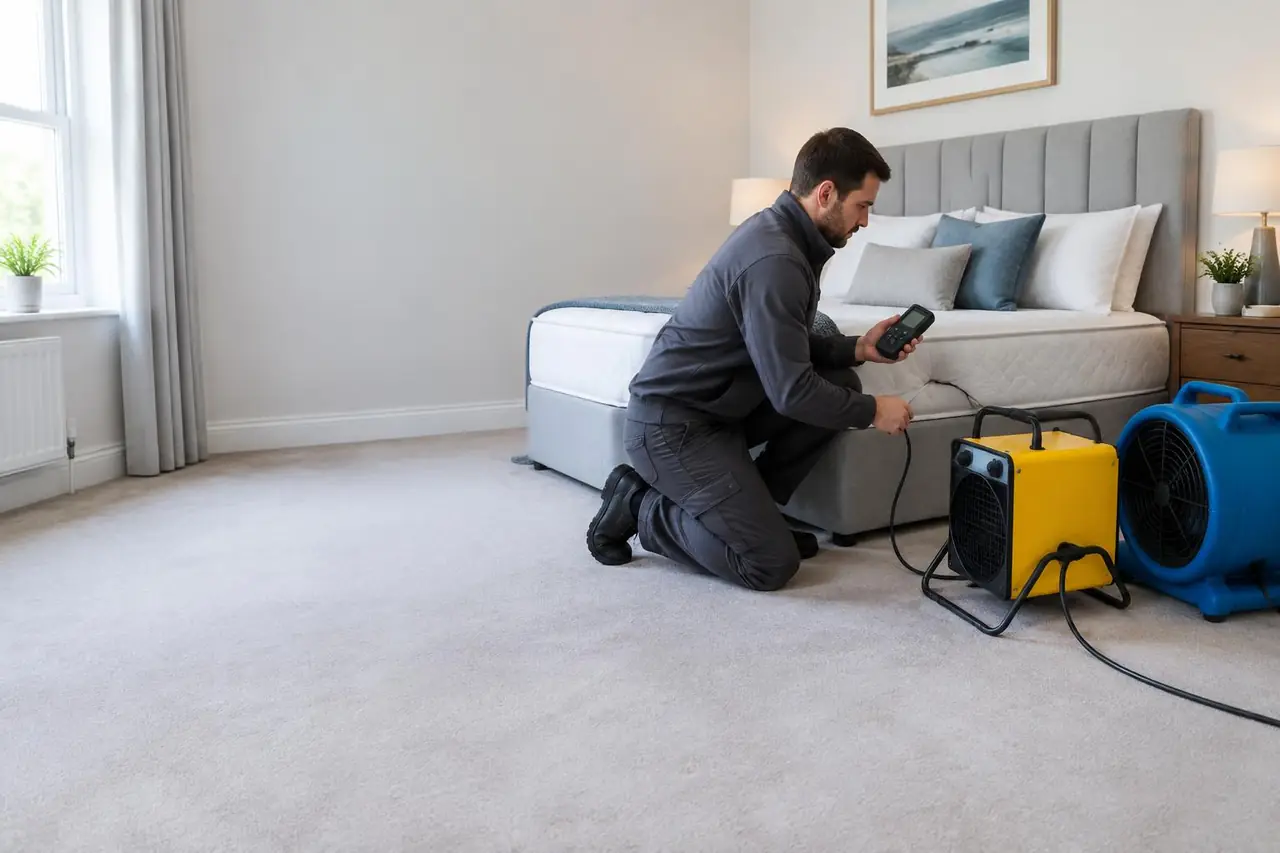
The wish to act immediately can lead to a bigger intervention than the evidence supports. Do not improvise whole-room heating with space heaters or try to make household heating act as a treatment system. EPA technical guidance warns that household heating is unreliable for bed bug control and that control itself can be complex.
That guidance is a US technical reference, not UK law. Its relevant distinction here is between controlled, professionally monitored heat and an improvised attempt. A closed bag, a cleaned surface or an item that feels hot is not proof of successful treatment. Avoid promising your household that one quick action has eliminated all uncertainty.
If identification supports a bed bug concern, ask what response is justified for the affected belongings and whether the home needs assessment. Do not leap from a single travel-related suspicion to a whole-property treatment decision. Ask about suitable options and their limitations; neither heat nor chemical approaches should be presented as universally successful. Let assessed circumstances, rather than urgency alone, shape the next step.
10. Make the next enquiry specific and useful
Before contacting a provider, assemble a short account: what was found, where, when, which belongings were involved and what you have already done. Include photographs if available, while recognising that they may not settle identification. Ask whether you need an assessment, advice about a contained item or further evidence before any treatment is considered.
For a service enquiry in Cambridgeshire, Bed Bug Heat Control UK can be contacted on 0800 274 0156 or info@bedbugheatcontroluk.co.uk, 7am–10pm Monday–Sunday. An enquiry is not a booking, and a quote is property-specific. Describe the evidence first, rather than assuming that asking about prevention commits you to treatment or establishes that your property is affected.
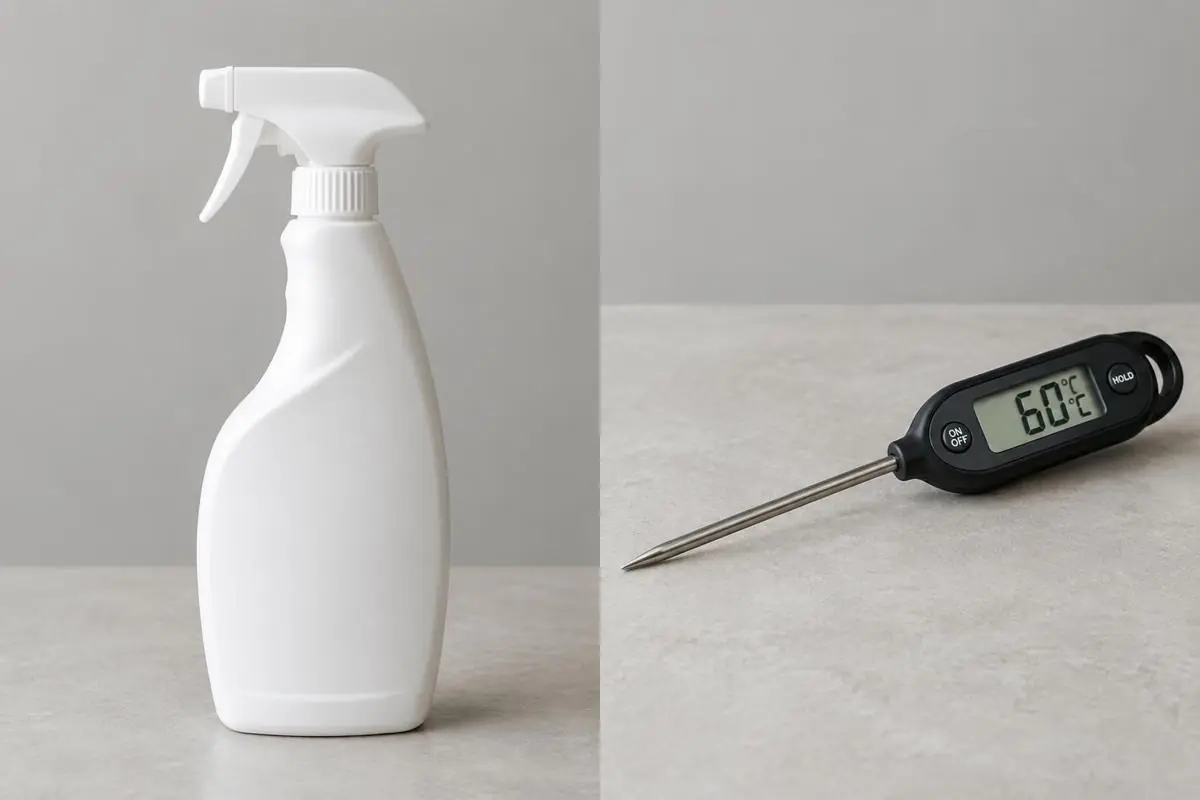
If treatment is proposed, ask why it is appropriate and what it covers. The company's chemical-free controlled professional heat operates at 60–65°C; a single-day process is subject to property assessment. Ask for the full coverage and conditions of the three-month written guarantee before booking. Meanwhile, agree who will handle the enquiry, leave contained items undisturbed and keep normal routines for belongings outside the concern.
Sources & further guidance
General information, not a diagnosis, medical advice or legal advice. Research and US EPA references provide technical background, not UK law, and do not endorse our company. Your property assessment and the team’s written preparation instructions take priority.