Professional bed bug heat treatment is best understood as a controlled process, not simply a room reaching a particular temperature. For a household deciding whether to proceed, the important questions concern where heat must reach, how exposure is monitored and when the property can safely be used again. Bed Bug Heat Control UK describes its service as chemical-free controlled professional heat at 60–65°C. That is a service specification, not a promise that every bed bug dies after a universal number of minutes. This guide explains the reasoning behind professional heat treatment and the information you should expect before agreeing to it. It focuses on assessment, heat exposure, monitoring and handover, rather than providing preparation checklists or instructions for heating a home yourself. A useful enquiry should leave you understanding both the intended treatment and its limits.
How professional bed bug heat treatment works
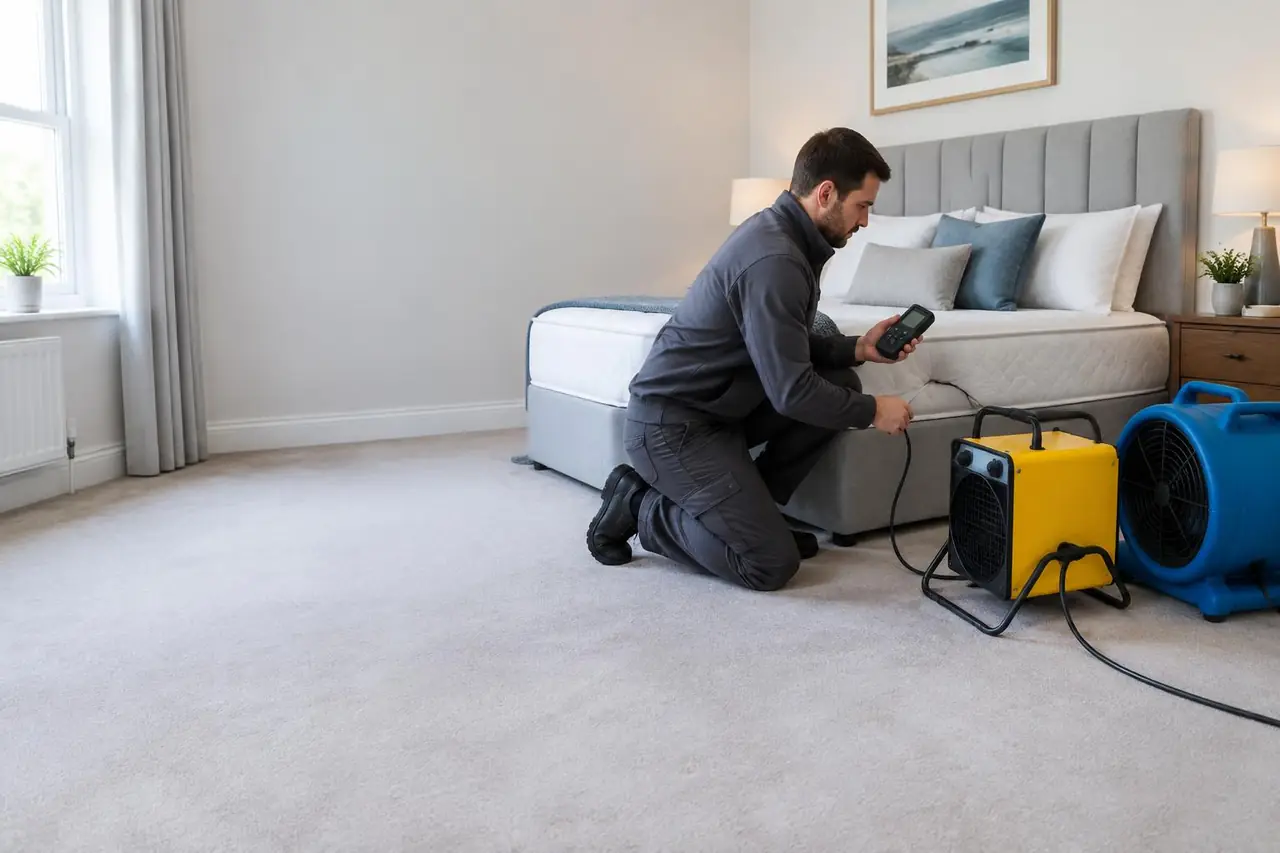
Professional heat treatment uses controlled heat to address bed bugs within an agreed treatment area. The practical challenge is not merely producing hot air: it is managing exposure where the insects may be concealed. A household therefore needs an explanation of the proposed coverage, not just a headline temperature or a description of the heating equipment being brought inside.
Hidden locations matter because bed bugs are not confined to the sleeping surface. NHS information identifies bedframes, clothing, pictures and loose wallpaper among their hiding places. Those possibilities help explain why treating a mattress alone is not equivalent to addressing an assessed infestation, and why the provider needs information about the wider room and surrounding spaces.
Ask the assessor to explain how the proposed treatment relates to the evidence found in your home. Which spaces are included, what remains outside the scope, and what uncertainties need resolving? That conversation should establish a clear purpose for the work without suggesting that every property needs an identical treatment plan or that heat offers an unconditional outcome.
What the 60–65°C service specification actually tells you
Bed Bug Heat Control UK specifies chemical-free controlled professional heat at 60–65°C. Read that figure as information about its service, rather than a standalone biological rule. It does not, by itself, tell you how long a particular hiding place is exposed, whether every relevant location has been reached, or when the treatment should be considered complete.
A temperature claim becomes meaningful when the provider explains what is being measured and how it informs treatment decisions. A reading in one position should not be presented to you as proof of conditions everywhere. Ask whether the stated range refers to monitored treatment conditions and how areas that are harder to assess are taken into account.
Avoid translating the advertised range into a countdown of your own. There is no universal lethal timer provided here, and the service temperature should not become a household heating target. The useful decision is whether the provider can connect its temperature specification to a credible explanation of exposure, monitoring and the assessed scope of your particular job before you agree to proceed.
Why exposure matters alongside temperature
Exposure means considering the heat conditions experienced at the places being treated, rather than looking only at a displayed number. Reaching a stated temperature at one measurement point is not the same question as delivering the intended exposure across an assessed treatment area. This distinction is central to understanding what a professional service is trying to achieve.
A provider should be able to explain how it decides that treatment has progressed sufficiently, without reducing the explanation to an unsupported promise about minutes. Ask what information guides continuation, adjustment or completion. You do not need to interpret technical readings yourself, but you should understand why the operator considers the planned exposure appropriate for the property.
This also explains why treatment duration and time away from home are different pieces of information. Access, assessment, the controlled process and arrangements for return all belong in the discussion. If you need to organise work, school collection or somewhere to stay, request a practical attendance window and ask what could cause that estimate to change on the day, rather than relying on a temperature claim.
Continue the topic: Chemical-free heat treatment for households with children and pets
What to ask about professional monitoring
The US Environmental Protection Agency supports professionally monitored heat and warns that household heating is not reliable for bed bug control. Its guidance is a technical reference, not UK law. The relevant principle for a UK household is that professional heat should involve informed oversight, rather than an assumption that switching on heating equipment completes the task.
Ask the provider how temperature is monitored, how measurement locations are selected and how the operator responds when readings differ. These are questions about the proposed service, not a request for instructions to reproduce it. A clear answer should distinguish measurements from assumptions and explain how monitoring supports decisions throughout the controlled treatment process at your property.
Before agreeing, also ask what information will be available at handover. Will you receive an explanation of the completed scope, any limitations encountered and the next steps? Do not assume a particular report or monitoring record is included unless confirmed. What matters is having an understandable account of the work and a route for raising concerns afterwards, rather than an unexplained assurance that everything became hot.
How assessment defines the treatment boundary
A property assessment should connect the suspected or confirmed problem to the proposed work. Bites alone cannot identify bed bugs, so a treatment enquiry should not turn a skin complaint into a definite infestation. Explain what evidence you have and where it was found, and ask how any uncertainty will be addressed before treatment is agreed.
Once there is a basis for treatment, clarify its physical boundary. Does the proposal cover particular rooms, belongings within those rooms or a wider area? Ask how spaces outside that boundary affect the plan. In a flat or shared building, flag connected spaces so the provider can explain what its proposed work does and does not address.
Put any limits into the written scope rather than leaving them as a verbal understanding. If something cannot be included or needs separate consideration, ask what that means for the expected result. This is not a reason to demand treatment everywhere; it is a way to make an informed decision about whether the proposed coverage matches the evidence and the practical circumstances of your home.
Why a single-day process still needs a property-specific plan
Bed Bug Heat Control UK describes a single-day process, subject to property assessment. That qualification matters: it is not an unconditional promise that every enquiry will fit the same timetable. Before arranging time away, ask whether your property has been assessed sufficiently for the provider to confirm the expected schedule and explain any remaining dependencies or uncertainties.
Keep three questions separate: when the team expects access, when the treatment is expected to finish and when occupants may return. They may be related, but they are not interchangeable commitments. If an advertised single-day service is important to your decision, ask what it means in your quotation rather than interpreting it as guaranteed access by a particular hour.
Explain practical constraints early, including any difficulty arranging alternative space for household members or pets. The provider can then discuss whether the proposed arrangements are workable before you commit. An enquiry is not a booking, and a quote is property-specific. Avoid making irreversible plans on the strength of a general service description when the assessment or return arrangements are still outstanding and have not been confirmed.
For a property-specific assessment, see our bed bug heat treatment in West Midlands. Share your postcode and property details so the team can confirm coverage and availability.
Chemical-free treatment does not remove the need for safeguards
Chemical-free describes the treatment approach; it should not be read as permission to remain in the treatment area or handle equipment. Controlled professional heat still requires clear household boundaries. Ask who must be away, which areas must remain inaccessible and who will communicate any change to those arrangements while the work is taking place at home.
Before treatment, raise concerns about belongings that may need special consideration. This guide does not provide a removal list, because the appropriate instructions should come from the provider’s assessment. Ask for written guidance and clarify anything ambiguous before moving items. Unplanned movement can complicate the agreed scope, so the treatment team needs to know about proposed changes.
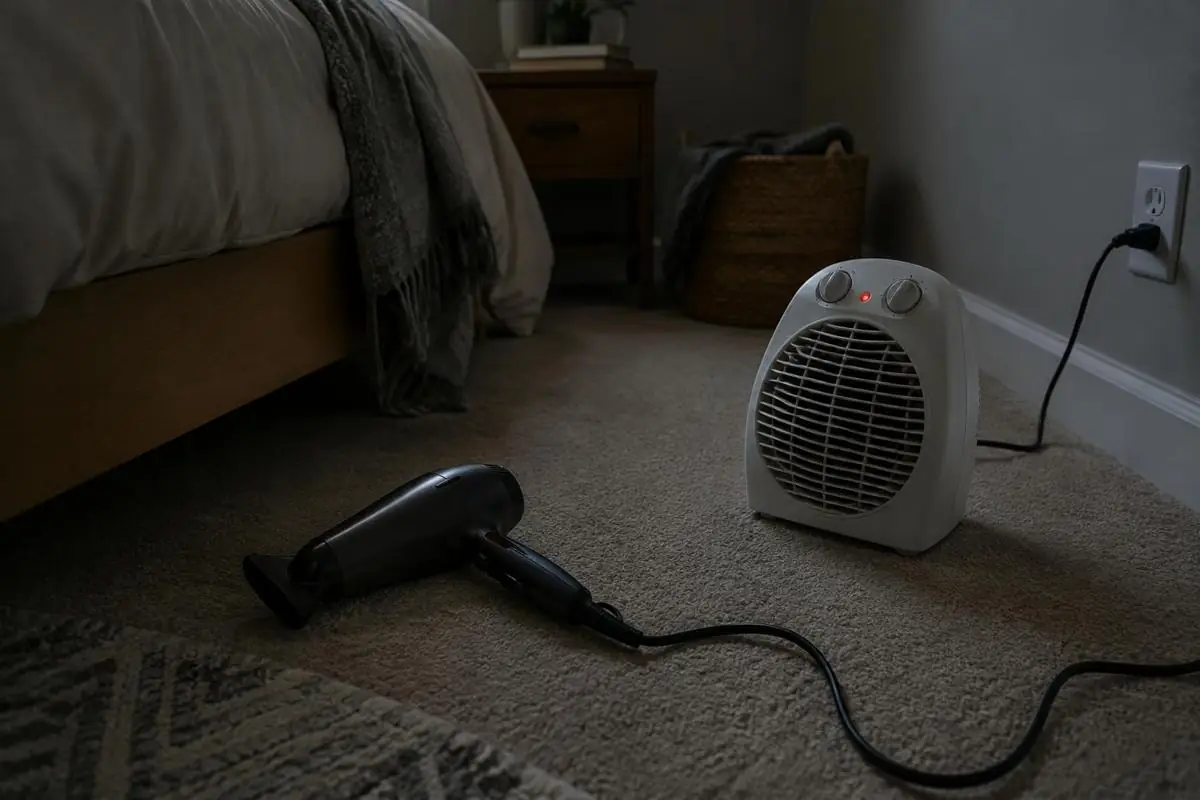
Do not attempt to support the service with household heaters or improvised heating. EPA guidance specifically warns against DIY space-heater treatment and describes bed bug control as complex. The safe household contribution is accurate information, compliance with the agreed professional instructions and prompt communication if those instructions cannot be followed. It is not trying to make the property hotter yourself before the professionals arrive or after they leave.
Safe return needs an explicit handover
Safe return should be an instruction from the provider, not a decision based on the clock, the advertised temperature or how the home feels from the doorway. Before treatment starts, establish who will authorise re-entry and how you will receive that message. Give the team a reliable contact and identify a backup if you may be unavailable.
Ask whether the handover will include any remaining access restrictions, instructions about belongings or conditions that must be met before normal use resumes. Do not assume that the end of active treatment automatically answers every question about using the space. If the instructions are unclear, request clarification before bringing other household members or pets back inside.
Share the agreed return message with everyone who might enter independently, including someone collecting possessions or arriving home early. A simple household agreement about waiting for confirmation is more useful than several people working from different estimates. If access becomes urgently necessary during treatment, contact the provider rather than entering to retrieve an item or making your own judgement about whether it is safe.
Related practical reading: Why DIY heating and quick bed bug remedies can make things worse
Treatment completion and evidence of success are different
Completion means the provider has finished the agreed work; it should not be confused with a claim that professional heat can never fail. Ask how concerns after treatment will be assessed and what information would help. A clear follow-up route is more useful than an absolute reassurance that leaves you unsure what to do if doubts arise.
Bites alone cannot establish whether bed bugs remain, just as they cannot confirm the original identification. If you notice something concerning afterwards, record what you observed and where, and contact the provider for guidance. Avoid immediately declaring success or failure from a single ambiguous sign. Detailed aftercare monitoring belongs in the follow-up plan, not in guesswork.
Bed Bug Heat Control UK offers a three-month written guarantee, with full coverage and conditions explained before booking. Read those terms alongside the treatment scope and ask how a concern is reported, assessed and addressed. Do not assume the guarantee covers every circumstance or specifies a particular response unless the written terms say so. Keep it with your quotation and any handover information for easy reference.
Make your enquiry about coverage, monitoring and return
Start your enquiry with the evidence you have, the rooms involved and any access or household constraints. Then request a property-specific quote that explains the proposed scope. For a West Midlands service enquiry, give the property location and ask about availability rather than assuming coverage or a treatment date from general information about the business alone.
Bed Bug Heat Control UK can be contacted on 0800 274 0156 or at info@bedbugheatcontroluk.co.uk, with opening hours of 7am–10pm Monday–Sunday. It states 40 years in the industry, full insurance and unmarked vans. These facts may inform your choice, but they do not replace asking how the proposed controlled heat process will be assessed, monitored and handed over.
Before turning an enquiry into a booking, obtain clear answers to four questions: what is included, how exposure is monitored, who authorises safe return and what the written guarantee covers. Resolve any gaps in the proposed timetable or household arrangements at that stage. Your next step is not to interpret 60–65°C as a timer, but to decide whether the assessed service and its conditions are clear enough to accept.
Sources & further guidance
General information, not a diagnosis, medical advice or legal advice. Research and US EPA references provide technical background, not UK law, and do not endorse our company. Your property assessment and the team’s written preparation instructions take priority.