A bed bug report in a holiday let creates two problems at once: a possible pest issue and an immediate hosting decision. You may have guests in residence, a cleaner arriving shortly and another booking due to start before you have reliable answers. The most useful response is not to rush through a normal changeover or make promises based on photographs alone. It is to slow down the right decisions, obtain a professional assessment and keep everyone working from the same information. This guide explains how UK holiday-let hosts can organise that response while protecting guests, supporting their cleaning team and planning a realistic return to hosting.
1. Treat the first report as a hosting issue that needs evidence
A guest may report itchy marks, an unfamiliar insect or marks on bedding. Those observations deserve a prompt response, but they do not all establish the same thing. Skin reactions alone cannot confirm bed bugs, and an unclear photograph may not support a reliable identification. Acknowledge what the guest has noticed without dismissing it or declaring an infestation immediately. Your first objective is to establish what has actually been observed and arrange an appropriate assessment, rather than debate how likely the report seems.
Ask for a brief factual account: which room was involved, when the concern arose and whether anything visible can be photographed without disturbing furniture. Avoid turning guests into inspectors or asking them to take beds apart. Keep their original message and any images together so the professional assessing the property receives the same information you did. If the report concerns symptoms rather than physical evidence, record that distinction clearly. It helps prevent assumptions from becoming accepted facts as messages pass between different people.
Do not try to settle who brought bed bugs into the property. Their presence does not establish poor housekeeping, and the timing of a report rarely proves the route of introduction. Speculating about a particular guest, cleaner or previous booking can damage communication without helping treatment. A more useful internal record separates confirmed observations, unanswered questions and actions already agreed. That simple distinction gives you a sound basis for discussing occupancy, access and the next arrival with a professional.
2. Make deliberate decisions about the booking calendar
A same-day changeover can create pressure to treat uncertainty as reassurance. Resist the temptation to assume that a routine clean makes the next booking straightforward. Where there is credible evidence of bed bugs, temporarily pausing new arrivals while you obtain professional advice is a sensible operational precaution. This is not the same as announcing that every room is affected. It gives you time to understand the concern and avoids making a fresh hosting commitment before the property has been properly assessed.
Review the actual calendar rather than thinking only about the next guest. Identify current occupancy, the next scheduled arrival, cleaner availability and any access restrictions that could delay an assessment. If a booking platform or management agency is involved, use its current support process to discuss the practical options. Cancellation, relocation and refund arrangements vary, so avoid making assumptions about what a platform will authorise. Keep those commercial conversations separate from technical questions about whether bed bugs are present and what treatment is appropriate.
Avoid promising a reopening date based solely on the length of a treatment appointment. Availability, assessment, preparation and the technician's advice all influence the schedule. A property might need decisions about more than the bedroom mentioned in the original report. Give upcoming guests updates at agreed points rather than repeatedly offering optimistic estimates. A clear statement that an assessment is being arranged is more dependable than saying the property will definitely be ready before anyone has established the necessary work.
3. Give resident guests a clear point of contact
Guests already staying in the property need practical coordination, not a stream of messages from different people. Choose one host or manager to handle updates, with a named backup if necessary. Explain what is known, what remains uncertain and when they should expect the next contact. Do not ask them to purchase sprays, attempt heating or carry out preparation independently. Those requests shift responsibility onto visitors and may complicate a professional response before the extent of the problem is understood.
Changing sleeping arrangements within the property should not become an improvised substitute for assessment. Moving people, bedding and belongings between rooms may complicate the situation, particularly if items are moved without a coordinated plan. Ask the professional how to handle the specific circumstances rather than automatically directing guests to another bedroom. If guests decide to leave, keep the discussion focused on agreed arrangements and their questions. Do not promise that moving elsewhere either proves or eliminates any concern about their belongings.
Acknowledge the disruption without making medical claims or guaranteeing outcomes you cannot verify. You can be considerate about a guest's discomfort while remaining clear that skin marks are not a diagnosis. If someone asks health questions, explain that these need an appropriate healthcare professional rather than a host's judgement. For accommodation questions, give accurate information about the steps you are taking. Calm, specific communication is more useful than either minimising the report or describing worst-case scenarios that have not been established.
Continue the topic: Bed bug heat treatment versus sprays: making an informed choice
4. Bring cleaners and laundry arrangements into the response
Holiday-let cleaners often arrive before the owner and may be the first people asked to deal with the concern. Tell the cleaning team about the report before the scheduled changeover, rather than leaving them to discover it in a guest message or bedroom. Explain that an ordinary turnover clean is not a bed bug treatment. Their immediate role should be agreed with the person coordinating the response, not improvised under pressure to have the property looking ready for the next arrival.
Ask the cleaning supervisor to review whether any routine collections, deliveries or transfers are already scheduled. Linen services, spare bedding stores and cleaning equipment can connect several properties operationally, even when those properties are otherwise unrelated. Tell the assessing professional what has already happened and ask how any outstanding movements should be handled. Do not independently introduce a new bagging, washing or transport procedure and assume it will solve the issue. Different teams need one agreed plan, not several well-intentioned but conflicting systems.
If heat treatment is booked, the official checklist at /bed-bug-heat-treatment-preparation is the one list to follow. It requires bedding to be bagged before it is moved, then hot-washed, dried and kept in fresh clean bags until technicians advise it can be returned. It also gives specific instructions for clothes stored under beds and in bed storage. Assign responsibility for following those instructions and ask technicians about uncertainties. Do not replace the checklist with a cleaner's normal changeover routine or an online alternative.
5. Arrange an assessment that reflects how the property is used
A holiday let's advertised bedroom count may not describe every sleeping arrangement. Sofa beds, occasional guest rooms and spaces used differently by different groups can matter to an assessment. Tell the professional how the property is actually used, including any reported changes during the current stay. This is not an instruction to assume every area is affected. It provides the context needed to decide what should be assessed, rather than limiting attention to the mattress shown in the first photograph.
Provide a straightforward account of access and layout. Explain whether the accommodation is self-contained, shares an entrance or sits alongside other guest units under the same management. Mention any previous pest work and supply its records if available. If someone has already used a product or attempted a remedy, say so accurately rather than leaving it out because it feels embarrassing. A professional can make better decisions with a complete account than with a simplified story designed to fit an expected treatment.
The assessment should guide the proposed treatment area and the practical plan. A host cannot reliably settle those questions from booking dates or room allocation alone. Ask the professional to distinguish identified evidence from areas included for treatment planning, and request clarification if the scope is unclear. For owners managing several cottages or apartments, avoid assuming that one report means every property needs identical work. Each decision should reflect the available evidence and any relevant connections between the properties.
6. Build the treatment plan around access and responsibility
If professional heat treatment is recommended, decide who has authority to approve the work and who will be available to answer property questions. Remote owners sometimes rely on an agent, cleaner and maintenance contractor without making anyone responsible for the overall plan. That can lead to missed instructions and delays on the day. Nominate a single coordinator who can communicate with the technicians, arrange access and confirm that the official preparation requirements have been understood by everyone carrying them out.
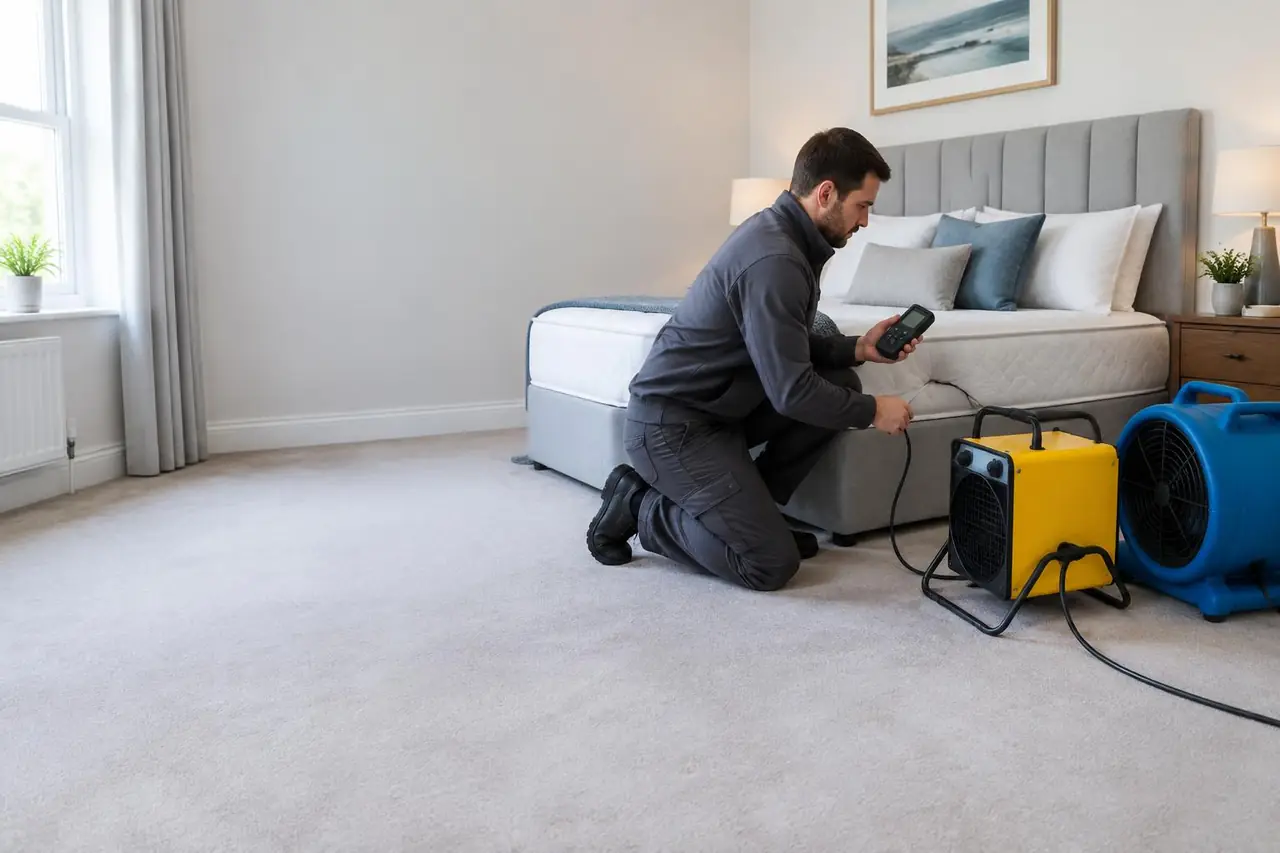
Bed Bug Heat Control UK provides 100% chemical-free heat treatment at 60–65°C. For a holiday-let host, the operational question is not simply whether that temperature sounds effective, but how the property will be assessed, prepared and treated by professionals. Do not attempt to reproduce the process using domestic heating or portable appliances. Discuss the proposed scope and any property-specific concerns before booking, particularly where the owner is absent and several people will share responsibility for getting the accommodation ready.
The official preparation checklist tells customers to block out 4–6 hours for treatment, arrange parking close to the front door and hand over a key or agree a meeting time. Use those requirements when coordinating contractors and access. Do not treat the time allowance as a promise that guests can arrive immediately afterwards. Confirm the handover and re-entry arrangements directly with the technicians, and leave your hosting schedule flexible enough to follow their instructions rather than forcing the work into a normal turnover window.
For a property-specific assessment, see our bed bug heat treatment in North Yorkshire. Share your postcode and property details so the team can confirm coverage and availability.
7. Use one preparation checklist, even with several contractors
Holiday lets often have several people looking after different parts of the building. An owner may manage bookings, a cleaner may handle linen and a maintenance contractor may hold information about alarms. Preparation can fail when each person sees only their own task. Share the official checklist at /bed-bug-heat-treatment-preparation with the coordinator and everyone assigned work. It is the one list to follow. A task allocation sheet may identify who is responsible, but it should not rewrite, shorten or alter the preparation requirements.
Pay particular attention to arranging the fire, safety and alarm requirements through the appropriate responsible people. The checklist requires sprinklers to be fully drained and disarmed, heat detectors isolated throughout the treatment zone, and smoke detectors disarmed or covered. It also requires WiFi, smart or monitored heat and smoke alarms to be disabled. These are arrangements to resolve before treatment, not matters to delegate casually to arriving guests or assume the cleaner can handle. Raise any uncertainty with the technicians before the appointment.
The same checklist covers belongings, electronics, books, bedding, beds and furniture, so avoid adding a blanket instruction to empty the property. It specifically says mattresses, emptied beds, dismantled wooden frame parts and the listed furniture should stay in the room. It also requires all electronics to be removed from treated rooms and gives separate directions for other items. Read the complete list rather than relying on examples in this guide. If nobody can safely complete a requirement, contact the company instead of substituting a different method.
8. Communicate discreetly without making misleading assurances
Discretion matters in a holiday let, particularly where neighbours, other guests or passing visitors can see contractors arriving. However, discretion should mean handling information carefully, not withholding practical information from people who need it. Cleaners, property managers and affected guests need an accurate understanding of their own arrangements. Avoid broadcasting personal details or speculating about an alleged source. Keep communications factual and relevant to each recipient, with the coordinator ensuring that technical information remains consistent across separate conversations and booking channels.
Bed Bug Heat Control UK uses discreet unmarked vans and is fully insured. Those features can help hosts organise professional attendance without unnecessary public attention, but they do not replace clear guest communication or property-specific planning. Ask the company about arrival arrangements rather than giving neighbours or visitors an invented explanation for the work. If someone needs access information, provide it honestly and proportionately. There is no benefit in creating a second communication problem while trying to resolve the original pest concern.
Future guests may ask whether the property has had treatment or whether their booking is affected. Answer using the facts available at that time, including whether assessment or work is still pending. Avoid describing a property as permanently bed bug-proof, because treatment cannot prevent every possible future introduction. Equally, do not imply that an unconfirmed report has established an ongoing infestation. A concise, accurate update about the property's current status is more useful than absolute assurances or a detailed account of another guest's experience.
Related practical reading: How professional bed bug heat treatment works
9. Base reopening on the completed plan, not appearances
A freshly made bed and an immaculate sitting room do not establish whether a bed bug issue has been resolved. Before reopening, confirm that the agreed treatment has been completed and that you understand the technicians' instructions for returning the property to use. Do not substitute a visual impression for that handover. Equally, avoid inventing a universal waiting period for every holiday let. Re-entry, returning items and any further steps should follow the advice given for the actual property and treatment.
Keep the treatment documentation with the property's operational records, alongside the agreed instructions and the contact details for follow-up questions. Bed Bug Heat Control UK provides a 3-month written guarantee. Ask to see and understand its written terms, including how to raise a concern, rather than assuming what it covers. A guarantee is not a promise against all future introductions by visitors. It should be understood as the written commitment supplied with the service, not expanded into additional claims in your guest communications.
Once hosting resumes, give the cleaning team a clear route for reporting any fresh concern promptly. They should know whom to contact and that a potential finding should not be dismissed simply because treatment has taken place. New reports still need assessment rather than an automatic conclusion about treatment failure or a new introduction. Keep any follow-up conversation connected to the existing treatment record so the professional receives useful context. This creates continuity without asking cleaners to make technical judgements beyond their role.
10. Create a repeatable host response without promising zero risk
The most useful improvement after an incident is a short operational response plan, not a claim that the property can never have another problem. Record who receives guest reports, who can pause arrivals, who contacts the treatment company and who authorises access. Include backup contacts for weekends and periods when the owner is away. Keep preparation instructions separate by linking to the official checklist, rather than copying an older version into a property manual that may later become incomplete or inconsistent.
For hosts with several properties, make sure the plan can be used without treating every report as an identical event. The layout, occupancy and available evidence may differ, and the appropriate response should follow professional assessment. Review where communication was slow or responsibilities were unclear, rather than looking for someone to blame. A dependable process makes it easier to respond proportionately: neither dismissing a credible concern because bookings are busy nor making sweeping claims before the facts are known and the property has been assessed.
If you need help deciding the next step, contact Bed Bug Heat Control UK on 0800 274 0156, open 7am–10pm daily. Readers in North Yorkshire can request a property assessment. Explain that the property is a holiday let, whether guests are currently staying and when the next arrival is scheduled, so those circumstances can inform the discussion. The aim is a clear sequence of assessment, agreed action and responsible reopening, supported by accurate communication rather than rushed promises to keep the calendar moving.
Sources & further guidance
General information, not a diagnosis, medical advice or legal advice. Research and US EPA references provide technical background, not UK law, and do not endorse our company. Your property assessment and the team’s written preparation instructions take priority.