Hotel room bed bug checks without the panic starts with a modest aim: make a calm decision about where to put your belongings and whether anything needs the hotel’s attention. You do not need to dismantle furniture, inspect every corner or prove that a room is completely free of bed bugs. A short visual check, with luggage kept closed while you look, is a practical starting point. This guide focuses on arrival, luggage racks, accessible areas around the bed and clear communication with hotel staff. It also explains when to stop checking and ask for help. Bites alone cannot identify bed bugs, and finding something unfamiliar is not a reason to blame housekeeping, another guest or yourself. The useful question is what you can observe and what the hotel can do next.
1. Pause unpacking before deciding where bags belong
When you enter the room, leave suitcases zipped while you decide where they will go. Avoid putting an open case, coats or children’s soft toys straight onto the bed. The purpose is to keep belongings together during your check, not to treat every surface as contaminated or turn arrival into a lengthy inspection of the room.
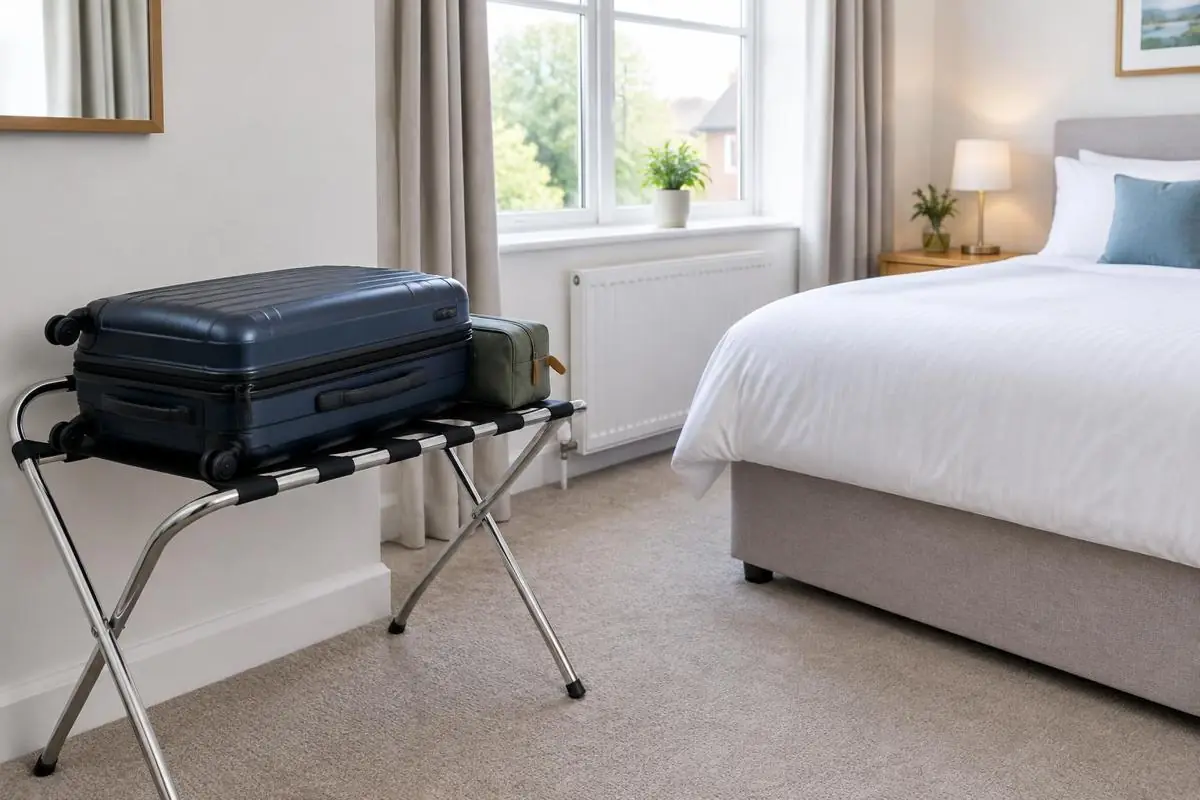
Choose a clear spot where bags can remain closed without blocking the doorway or creating a trip hazard. If a luggage rack is available, look at it before using it. Do not assume that a rack is automatically suitable simply because it is provided, or that putting luggage higher up offers a guarantee against exposure.
Agree a simple division of tasks if you are travelling together: one adult looks at the rack and bed area while another keeps belongings together. With children, explain that you are checking where everything should go. There is no need to use alarming language or ask the whole household to search separately for signs of insects.
2. Look at the luggage rack before opening your suitcase
Open the luggage rack as intended, provided it appears stable and safe to use. Look along the straps, their attachment points and accessible joints in the frame. Use the room lighting or a phone torch for a clearer view. You are checking visible surfaces, not taking the rack apart or testing its construction in any way.
If something catches your attention, pause before placing luggage on it. A photograph can help staff understand what you saw, particularly if the object is small or difficult to describe. An unfamiliar mark or insect is not automatically evidence of bed bugs. Keep the distinction between an observation and an identification clear from the beginning of the conversation.
If the rack looks suitable after this limited check, position it away from the bed where practical, without obstructing movement. Keep the case closed when you are not using it. If the rack raises concerns or there is nowhere convenient to place it, ask reception for assistance rather than improvising with unstable furniture or spreading belongings across the room.
3. Keep the bed check accessible and visual
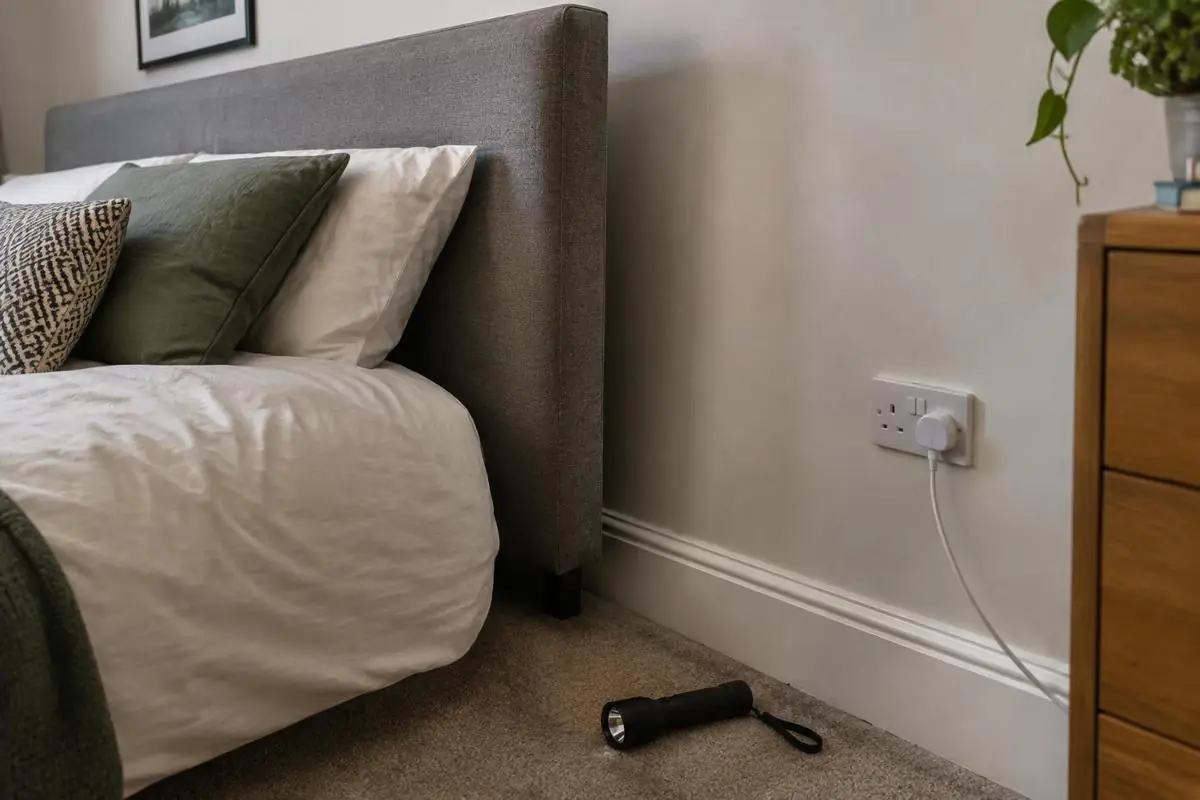
Turn to the bed once your bags are settled. Gently move back enough bedding to view accessible mattress edges and seams, then look at visible parts of the bedframe and headboard. Use a torch if helpful. There is no need to lift a heavy mattress, pull the bed across the floor or reach into awkward gaps.
The NHS describes adult bed bugs as approximately 5mm long and notes that they can hide in bedframes, clothing, pictures and loose wallpaper. That information explains why looking only at the middle of a sheet is limited. It does not mean a guest should remove pictures, peel wallpaper or investigate every potential hiding place in the room.
Keep your inspection to what can be seen safely without tools. If the layout prevents a reasonable look, ask hotel staff rather than attempting a more intrusive search. A brief check cannot certify a room as clear, but that limitation is not a reason to keep searching indefinitely or damage fixtures in pursuit of certainty about the room.
Continue the topic: What to do with luggage after suspected bed bug exposure
4. Describe what you see without diagnosing the room
If you notice an insect or an unexplained mark, describe its location and appearance before deciding what it means. For example, saying that you found a small insect beside a mattress seam gives reception something concrete to investigate. Saying that the entire hotel is infested goes beyond what a guest’s brief observation can establish on its own.
Take a clear photograph from a safe position if you can, including a wider view that shows the location. Do not carry bedding or a suspect item through the corridor to demonstrate your concern. Ask staff to come to the room instead. They can then see the area without belongings being moved unnecessarily between different spaces.
Keep any account of bites separate from your account of room evidence. NHS information notes that bites can be grouped, but bites alone cannot identify bed bugs. Neither the pattern nor noticing them during a stay proves where exposure occurred. For a room decision, focus on what is visible and what the hotel can arrange to check.
5. Use a stopping point rather than checking all evening
Set a practical endpoint: check the rack, look at accessible bed areas and then decide whether there is a specific concern to report. If nothing draws your attention, finish the arrival check and use the room without repeatedly reopening seams or searching behind furniture. The check is a precaution, not a promise that nothing could ever be present.
If you find something that needs clarification, stop unpacking and contact reception. You do not need to collect a large body of evidence before asking for help. Equally, uncertainty does not require an immediate declaration that bed bugs are present. A useful middle position is to explain that you have noticed something and want it assessed.
If members of your household disagree, return to the shared observation rather than debating worst cases. Decide who will speak to reception and keep the others updated. This avoids several people making conflicting requests or repeating searches. A calm stopping rule is especially useful when tiredness, a late arrival or children’s needs make decisions harder than usual.
6. Give reception a clear, neutral request
Contact reception with your room number, the location of the concern and a short description. You might say: “We have noticed a small insect near the bedframe and have paused unpacking. Could someone come and look?” This reports the issue without claiming an identification you cannot support or making assumptions about how it came to be there.
Ask who will assess the concern and what you should do with your belongings while waiting. If you have photographs, offer them as supporting information rather than conclusive proof. Request a clear next step: a staff visit, advice about remaining in the room or a discussion about alternative accommodation while the issue is considered by the hotel.
Keep the conversation factual even if the initial response feels dismissive. Repeat what you observed and ask to speak with the person responsible for handling room concerns. Blame about cleanliness, previous guests or staff adds little to that decision. Make a brief note of whom you spoke to and what was agreed so your household has one consistent account.
For a property-specific assessment, see our bed bug heat treatment in Berkshire. Share your postcode and property details so the team can confirm coverage and availability.
7. Discuss a room change before moving belongings
If the hotel offers another room, ask how it has been selected and whether it has been checked in response to your concern. A room change can address your immediate accommodation needs, but a different room number alone is not evidence that the original observation has been identified or the replacement assessed. Ask rather than assume.
Before moving, explain whether your luggage has remained closed or whether belongings have already been unpacked onto the bed or into furniture. This is useful practical information, not an admission of fault. Ask staff how they want the move handled, and avoid carrying loose bedding, towels or suspect hotel items into the replacement room yourself unnecessarily.
Keep your own belongings together and follow an agreed plan instead of repeatedly transferring them between rooms while discussions continue. On entering the replacement room, use the same limited rack and bed check rather than escalating to a more exhaustive search. If concerns remain unresolved, ask the duty manager to clarify your options without treating reassurance as confirmed identification.
8. Keep the rest of the stay simple
Once you have decided to stay, choose one sensible luggage location and keep using it. Close suitcases after taking things out, and avoid spreading clothes across the bed unnecessarily. These are manageable precautions, not a requirement to keep every possession wrapped or to regard the room as unsafe despite having no specific concern to act on.
Give children a simple place for their belongings and explain any changes to the normal routine without frightening them. Adults can handle communication with the hotel privately where practical. If travelling with relatives or friends in another room, share only the observations and agreed actions they need, rather than presenting an uncertain finding as an established hotel-wide problem.
Do not introduce sprays, powders or improvised heating into the room. EPA technical guidance describes bed bug control as complex and warns against DIY space-heater treatment; household heating is not a reliable substitute for professionally monitored treatment. Those are US technical references, not UK legal rules. Any hotel investigation or treatment should be arranged through the hotel, not attempted by guests.
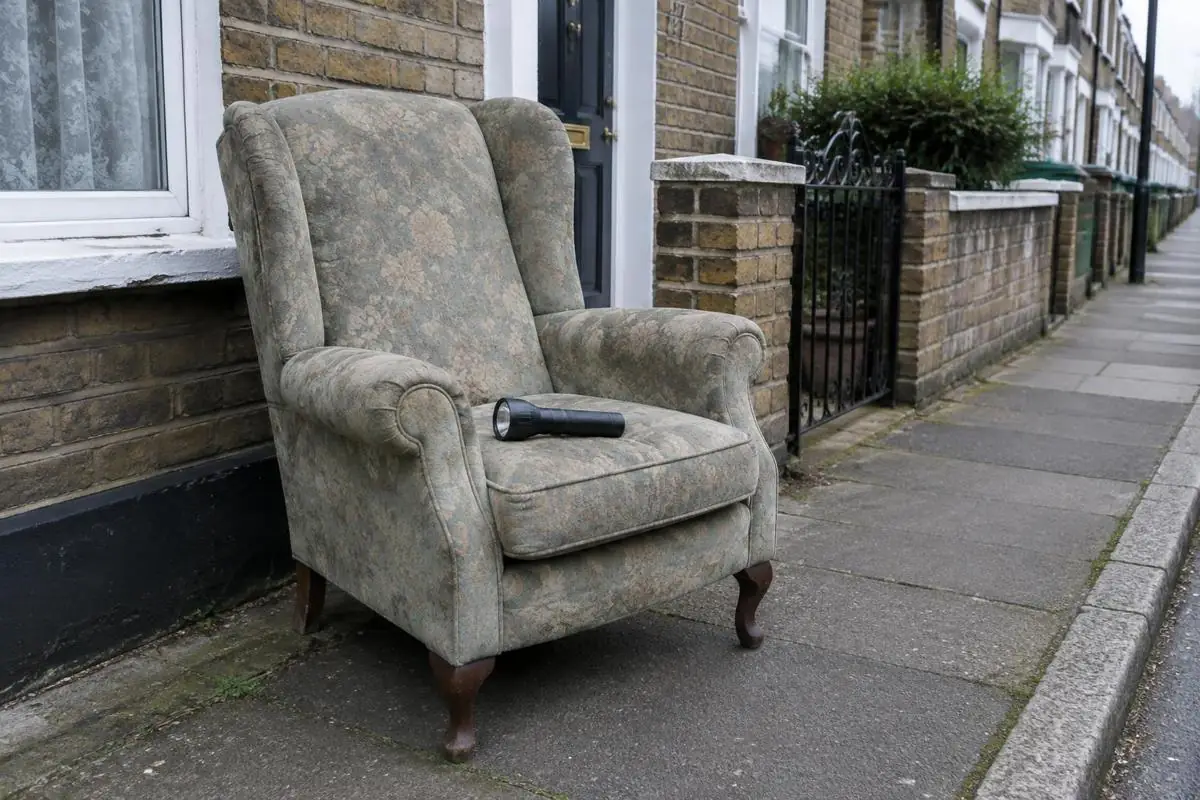
Related practical reading: Second-hand furniture: checking for bed bugs before bringing it home
9. Leave with a useful record, not a rushed treatment plan
If you reported a concern, ask for an update before departure where possible. Establish whether anyone inspected the area, whether an identification was made and whether there is anything further the hotel needs from you. Keep unanswered questions marked as unanswered. A staff visit, an apology or a room move does not by itself confirm bed bugs.
Save relevant photographs and a short note of the room, date and response. This can support a later conversation without requiring a detailed diary of every mark or sensation. Avoid discarding luggage or arranging home treatment solely because you felt uncertain in a hotel room. First distinguish suspected exposure from evidence of a problem at home.
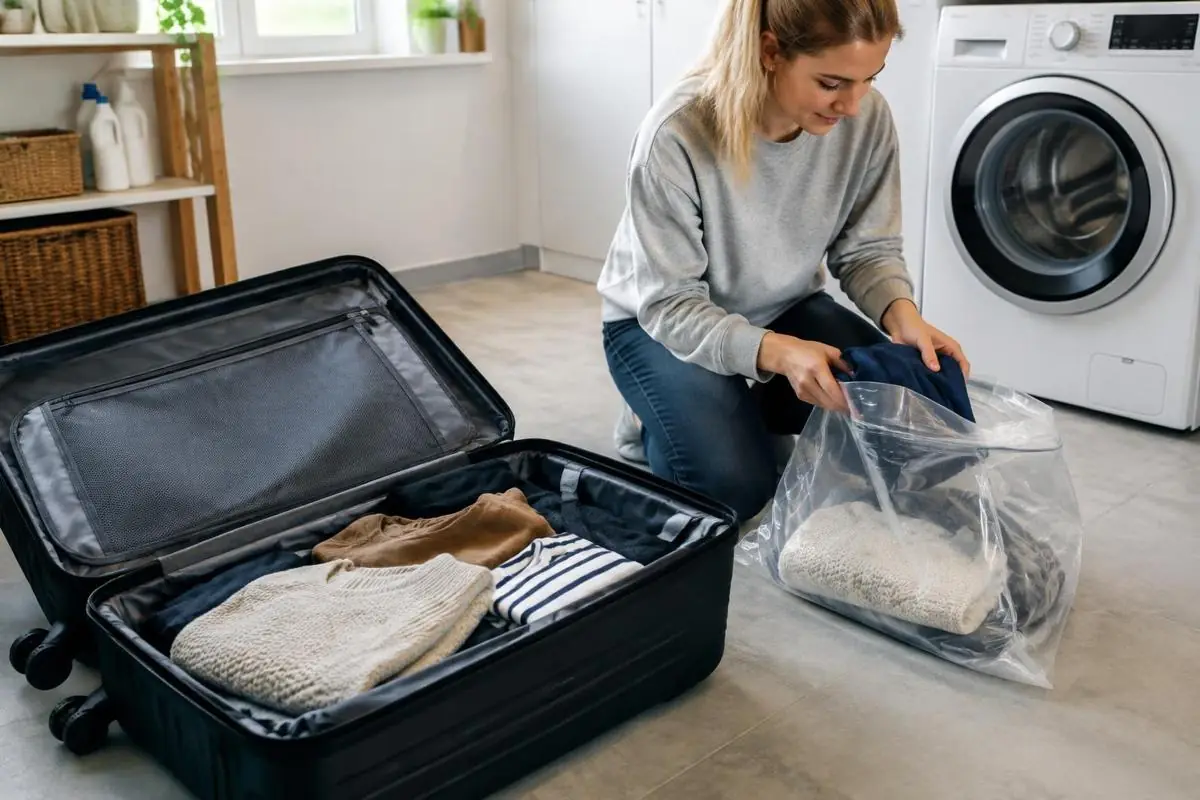
If belongings were near a specific suspect finding, the next guide on luggage after suspected exposure is the appropriate place for a careful return-home plan. Do not improvise appliance settings, heating or washing guarantees at checkout. Cleaning alone cannot guarantee removal, and an uncertainty about a stay should not become an unsafe rush to treat everything you own.
10. Match your next step to the evidence you have
Before leaving the issue behind, place it in one of three practical categories: no specific concern after a limited check; an unresolved observation reported to the hotel; or a finding that has been identified. These lead to different conversations. Keep the wording accurate when discussing the stay with your household, the hotel or anyone you approach for further advice.
For an unresolved observation, ask the hotel who will provide any follow-up and how to contact them. If a later concern arises at home, seek assessment based on the evidence there rather than assuming the hotel stay explains it. This keeps the decision proportionate and avoids turning a travel precaution into a treatment commitment without an assessed need.
If a home concern warrants a service enquiry in Berkshire, Bed Bug Heat Control UK can be contacted on 0800 274 0156 or at info@bedbugheatcontroluk.co.uk, 7am–10pm Monday–Sunday. Explain what was observed and what remains uncertain; an enquiry is not a booking, and any quote is property-specific. For the hotel stay itself, the immediate priorities remain contained belongings, clear observations and an agreed response from staff.
Sources & further guidance
General information, not a diagnosis, medical advice or legal advice. Research and US EPA references provide technical background, not UK law, and do not endorse our company. Your property assessment and the team’s written preparation instructions take priority.