A suspected bed bug problem can create an understandable urge to do something immediately. Turning up the heating, bringing in portable heaters or setting off a fogger may feel more decisive than waiting for an assessment. Yet an action that looks powerful is not necessarily one that reaches bed bugs safely or helps establish what is actually present. This guide, “Why DIY heating and quick bed bug remedies can make things worse”, explains where those shortcuts break down and how to choose a safer next step. The priority is not to leave a problem unattended: it is to avoid adding fire risk, unnecessary exposure or confusing changes to the evidence. For UK households, a useful starting point is to pause improvised treatment, preserve clear observations and ask for a property-specific professional assessment.
Why urgency is a poor reason to improvise heat
The first decision is whether you have evidence of bed bugs or an unexplained concern. Bites alone cannot identify them. The NHS notes that bites can be grouped, but that pattern is not proof of the cause. Before attempting treatment, separate what you have actually seen from what you fear might be happening in the room.
That distinction matters because improvised heating creates a real household hazard regardless of whether bed bugs are present. A portable heater used as pest-control equipment is not a harmless trial. Trying to make a room unusually hot, especially around bedding, clothing and furniture, introduces fire risk without establishing that concealed insects have received an effective treatment.
Agree a temporary household rule: nobody starts a heat experiment while evidence is being checked. If another person has already proposed one, explain the practical objection rather than dismissing their concern. The aim is to replace an uncertain intervention with a documented assessment, not to insist that nothing is wrong or delay help indefinitely.
A warm room is not a controlled bed bug treatment
Household heating is designed for comfort, not for delivering and verifying pest-control conditions throughout a furnished property. A room that feels extremely warm to a person does not demonstrate what is happening inside concealed harbourages. The EPA warns that household heating is not a reliable substitute for professionally monitored bed bug heat treatment.
Do not treat a professional temperature range as a target to reproduce yourself. Bed Bug Heat Control UK describes its service as chemical-free controlled professional heat at 60–65°C. Those figures describe its professional process; they are not instructions for setting domestic equipment or a promise that simply reaching a displayed temperature will resolve an infestation.
If someone suggests that more heaters or a longer heating period will compensate, stop at that decision point. More improvised heat does not supply professional assessment or monitoring. Ask instead how the provider checks conditions across the treatment area and accounts for concealed locations. A credible explanation should describe control and verification, rather than relying on how hot the room feels.
Do not turn domestic appliances into treatment equipment
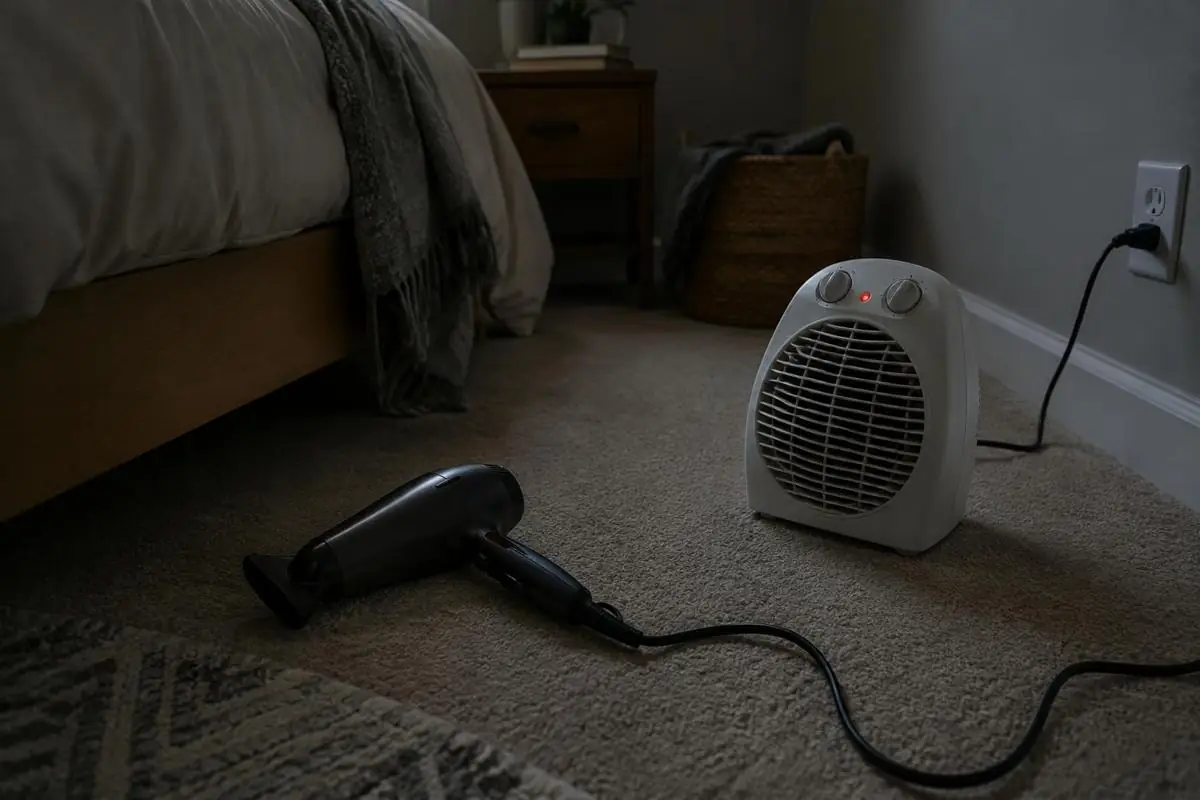
The fire-risk boundary should be clear: do not use portable space heaters to attempt a whole-room bed bug treatment. Do not repurpose cooking appliances or other household heat sources for the same aim. The EPA explicitly advises against DIY space-heater treatment; its advice is a technical safety reference, not a statement of UK law.
Avoid trying to solve the shortcomings of an improvised setup with extra equipment or alterations. There is no safe shortcut here involving appliance modifications, socket work or a homemade heating enclosure. Nor should household members be asked to watch an unsafe arrangement as though supervision turns it into a controlled professional treatment.
If equipment has already been assembled, abandon the treatment plan rather than testing whether it works. Return to ordinary, manufacturer-intended appliance use and seek advice about the suspected infestation. Where there is an immediate fire concern, prioritise getting people away from danger and obtaining emergency help, not saving belongings or continuing pest control. Bed bug decisions can wait until the immediate hazard has been addressed.
Continue the topic: How to prepare your home for bed bug heat treatment
Why a fogger does not prove hidden bugs were reached
A fogger can look comprehensive because it releases pesticide into a room. That visible action is not evidence that the product has reached the places where bed bugs are concealed. The EPA identifies limitations with foggers: they should not be relied on as the sole means of bed bug control, particularly because hidden locations may remain inaccessible.
This is not an argument that all chemical treatments fail. It is a distinction between releasing a product broadly and selecting an appropriate, assessed treatment. A household should not interpret a dramatic-looking application, a strong smell or an absence of immediately visible insects as proof that the problem has been resolved.
Do not add foggers or other pesticides to an improvised heating plan. If you are considering a product, seek advice on its suitability and follow its label rather than improvising. If one has already been used, retain the packaging and tell the assessor what was applied, where and when. That information is more useful than repeating the application simply because uncertainty remains.
Keep usable evidence instead of testing one remedy after another
Repeatedly changing the room can make the original concern harder to explain. Cleaning, moving furniture and applying several remedies in quick succession may leave you unsure which signs appeared before or after each action. An assessor needs a clear account of observations and interventions, not a polished room or a confident diagnosis from the household.
Start a short record with dates, rooms and exactly what was noticed. Photograph a suspected insect or mark where practical, keeping the description neutral. The NHS describes adult bed bugs as approximately 5mm long and notes hiding places including bedframes, clothing, pictures and loose wallpaper. These facts can inform observations without turning every mark into evidence.
Record previous attempts just as plainly: product name, location and date, or that household heating was increased. Do not conceal an unsuccessful attempt out of embarrassment. Ask how the assessor would prefer any suspected specimen to be retained safely, rather than carrying loose material between rooms or into another property. Preserve information without turning evidence collection into another disruptive household project.
Use containment, not a room-to-room rescue operation
When a quick remedy disappoints, the next impulse may be to carry bedding, clothing or furniture somewhere that feels safe. Pause before doing so. Unplanned movement can undermine containment and complicate the assessment of which areas need attention. The EPA’s DIY control guidance emphasises that bed bug control is complex and that care and containment matter.
For now, avoid redistributing suspect belongings around the home or taking them to someone else’s property for safekeeping. Ask for advice before major sorting or disposal. This is a temporary risk-management step, not a full preparation programme: detailed treatment preparation should follow the instructions given for your property and the method being proposed.
Ordinary cleaning may still have a role, but cleaning alone cannot guarantee removal. Do not use the amount of effort spent cleaning as the test of whether the home is clear. Tell other household members which belongings should remain where they are pending advice, and agree who will coordinate questions. One shared plan is safer than several people independently trying to rescue possessions.
For a property-specific assessment, see our bed bug heat treatment in Nottinghamshire. Share your postcode and property details so the team can confirm coverage and availability.
Explain the pause without minimising anyone’s worry
A useful household message is specific: “We have a concern, but bites do not confirm bed bugs. We are recording what we find and arranging advice. Please do not add heaters, release products or move suspect items elsewhere.” This gives everyone something concrete to follow without announcing an infestation that has not yet been established.
Ask each person whether they have already used a remedy or moved belongings. Keep the tone factual, particularly if someone acted quickly because they were frightened. The point is to build an accurate account for the assessor. Blame can make people less willing to disclose an application or an experiment that now needs to be considered.
Choose one person to keep the record and relay professional instructions, while ensuring everyone affected can ask questions. If someone wants immediate action, offer a defined task such as collecting photographs or listing prior products. Avoid promises that a room is safe or that a single intervention will definitely work. Honest uncertainty supports better decisions than reassurance that outruns the evidence.
Ask how the proposed treatment will be assessed and checked
A professional enquiry should begin with the evidence and the property, rather than a demand to reproduce a temperature you have read online. Describe the suspected locations, relevant photographs and anything already attempted. Ask whether further identification is needed and what information the provider requires before recommending treatment. An enquiry is not a booking.
For a heat proposal, ask how the property is assessed, how the treatment is monitored and what may affect its suitability. Ask what the process can and cannot establish about concealed areas. The EPA supports professionally monitored heat, but that does not mean professional heat cannot fail or that assessment can be replaced by a standard promise.
Also ask what evidence will be used to judge the outcome and what should trigger further contact. These questions distinguish a treatment plan from a reassuring headline. You do not need to become a heating specialist; you need a clear explanation of responsibilities, checks and next steps. If the explanation is unclear, seek clarification before agreeing to proceed.
Related practical reading: Heat-sensitive belongings: questions to ask before treatment
Check service promises without treating them as universal guarantees
Bed Bug Heat Control UK states that it has 40 years in the industry, is fully insured and uses unmarked vans. These details may help households assess experience, practical reassurance and discretion. They should sit alongside questions about the proposed work, however, rather than substitute for an explanation of why a particular approach suits your property.
Its stated single-day process is subject to property assessment. Do not assume that this means every enquiry can proceed on identical terms or that the property’s circumstances are irrelevant. A quote is property-specific. Describe previous DIY attempts early, so the discussion reflects the situation as it is rather than the situation before remedies were tried.
The business also offers a 3-month written guarantee, with full coverage and conditions explained before booking. Ask to understand those terms, including what to report and how any concern will be handled. A guarantee is not a reason to skip assessment or a claim that failure is impossible. Read the written explanation before making a booking decision, not after treatment.
Replace the quick fix with one clear enquiry
Your immediate next step is to stop unsafe experimentation and assemble a concise account: what was seen, where, when and which remedies have already been used. Keep photographs and product details together. Avoid expanding the project into a complete clear-out while waiting for advice. The objective is a safer, better-informed decision, not maximum activity.
To enquire with Bed Bug Heat Control UK, call 0800 274 0156 or email info@bedbugheatcontroluk.co.uk. Opening hours are 7am–10pm Monday–Sunday. If your service enquiry is for a property in Nottinghamshire, include that location alongside the property details and evidence available. Contacting the business is an enquiry, not a booking, and the quote will be property-specific.
End that conversation with three matters clarified: whether identification needs more work, whether the proposed treatment suits the property and what the household should do meanwhile. Request the written guarantee coverage and conditions before booking. Then share the agreed instructions with everyone at home, including the boundary against improvised heating or additional products. That replaces competing quick fixes with an accountable next step.
Sources & further guidance
General information, not a diagnosis, medical advice or legal advice. Research and US EPA references provide technical background, not UK law, and do not endorse our company. Your property assessment and the team’s written preparation instructions take priority.