Rebuilding sleep confidence after a bed bug problem is about making bedtime ordinary again without ignoring genuine evidence. Even after treatment, a mark on the skin, a speck on a sheet or an unfamiliar sensation can prompt another search. The aim is not to force yourself to feel certain, but to replace open-ended vigilance with a clear, manageable plan. This guide focuses on the aftercare period: practical evening routines, agreed limits on checking, calm household conversations and decisions about when to ask for further help. It does not replace your provider’s treatment instructions or offer medical advice. You can take sensible precautions while also protecting time for rest. Where worry remains persistent or interferes with daily life, NHS support is an appropriate next step alongside, rather than instead of, a factual review of any pest evidence.
Separate the pest question from the sleep-confidence question
Start by distinguishing two questions: is there evidence that needs a pest professional’s attention, and what would make tonight feel more manageable? They can overlap, but they do not require identical responses. A fresh, identifiable finding belongs in your aftercare process. Feeling unsettled deserves attention too, without automatically triggering another full bedroom inspection.
Write those questions on a short household note, with an action beneath each. For pest concerns, name the person or company to contact and the evidence they have asked you to provide. For bedtime concerns, choose an ordinary activity you find settling, such as quiet reading, and agree when practical discussions will finish.
This distinction avoids treating every anxious moment as proof of treatment failure. It also avoids dismissing a real finding merely because someone has been worried before. If you cannot tell which category a concern belongs in, record the uncertainty for a daytime review rather than trying to resolve it through repeated searches at night. You do not need an immediate answer to every ambiguous detail.
Agree a stopping point for bedroom checks
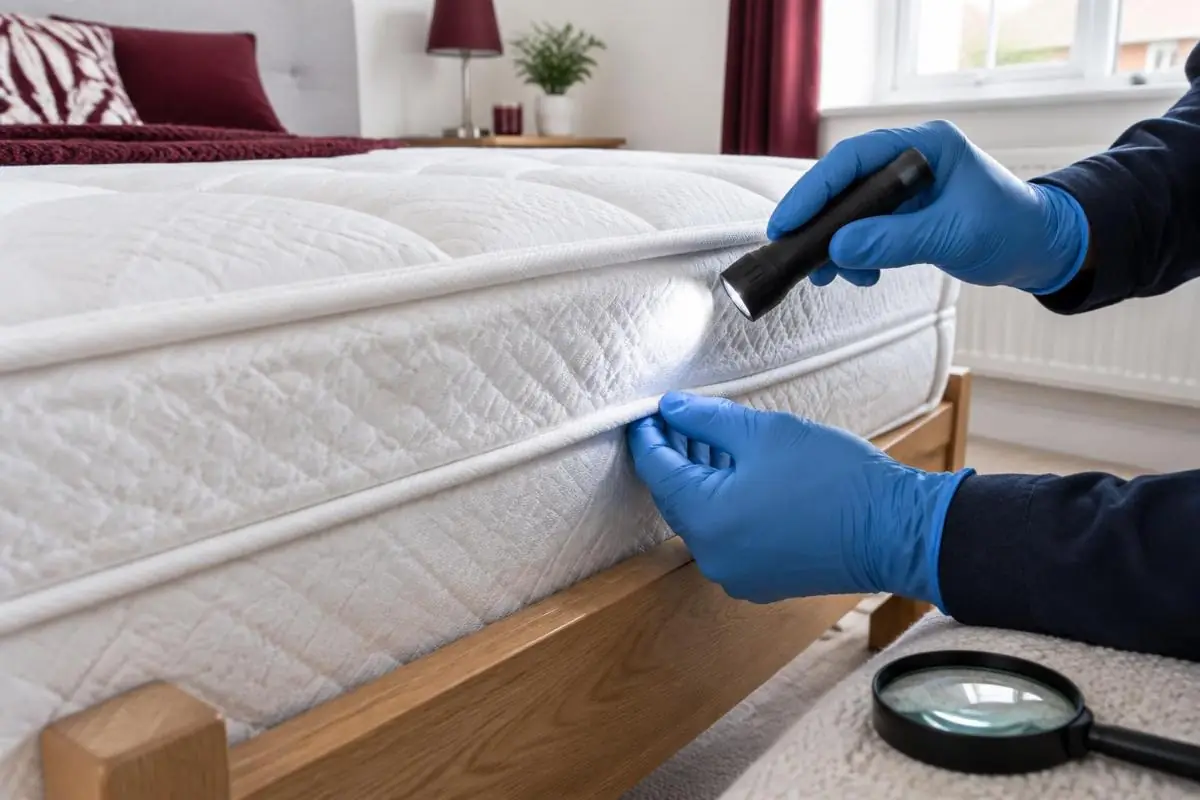
A useful check has a purpose and an endpoint. Follow any monitoring arrangements your treatment provider has supplied, then decide how those fit into household life. Ask which observations matter, where checks should be concentrated and what would justify contacting them sooner. Avoid adding a separate inspection whenever an uncomfortable thought appears.
Choose a review time that does not turn getting into bed into an investigation. Keep any agreed check limited to its stated task, rather than expanding from bedding to drawers, clothing and every adjoining room. When the task is complete, put inspection equipment away. The stopping point should be something observable, not the moment you feel completely certain.
If you find yourself restarting, refer back to the plan before acting. Is there a new finding, or are you looking again at something already considered? New evidence can justify a response; repeated uncertainty may call for support with the worry instead. Where professional instructions are unclear, ask for clarification rather than inventing a more demanding routine. Agree any changes during the day.
Keep skin marks out of the role of nightly verdict
The NHS describes bed bug bites as sometimes grouped, but bites alone cannot identify bed bugs. That distinction matters after treatment: a skin mark is not a reliable verdict on whether the property is clear or whether treatment has failed. Avoid making bedtime decisions solely by comparing marks with photographs found online.
If a mark concerns you, separate the health question from the identification question. Seek appropriate NHS advice about symptoms rather than asking a pest company to diagnose your skin. For the pest question, use the evidence route agreed with your provider. Do not ask another household member to repeatedly inspect your body as a substitute for either.
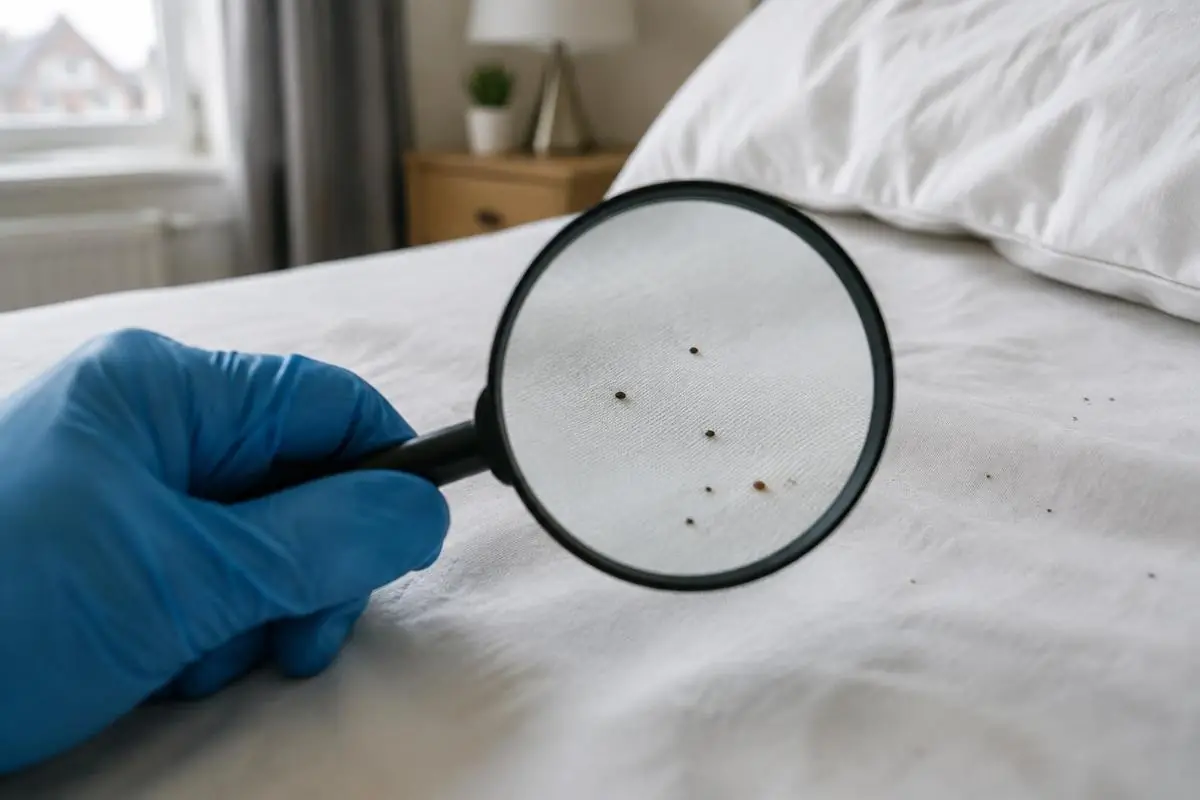
An ambiguous speck also deserves proportionate handling, not an immediate conclusion. Record what you actually observed without labelling it a bed bug unless identification supports that description. For example, note the location and whether a clear photograph is available. The goal is to give a professional something useful to assess, while avoiding a running catalogue of every sensation experienced overnight or every ordinary mark on bedding.
Continue the topic: How to spot bed bugs: a careful home inspection guide
Build an evening routine that does not revolve around pests
Choose a short sequence of familiar, non-medical activities that marks the end of household tasks. This might mean preparing what you need for tomorrow, washing as usual, then reading or listening to something quiet. Pick activities you already like; there is no requirement to buy sleep products or create an elaborate recovery programme.
Keep pest administration outside that sequence wherever possible. Reading treatment discussions, comparing pictures and sending long messages to the household can all become additional bedtime tasks. Set a daytime slot for those activities if they are needed. Leaving a question until that slot is a practical boundary, not a declaration that the concern is unimportant.
If worry interrupts the routine, jot down the question and the next appropriate action, then return to what you were doing. This is an option, not a test you must pass. Some evenings may remain difficult. Avoid judging the whole aftercare process by one night, and do not keep adding precautions simply because the routine has not produced immediate reassurance or a perfect night’s rest.
Make the bedroom usable without building new barriers
Follow the provider’s instructions about when rooms and belongings can be used after treatment. If you are unsure whether bedding, furniture or stored items can return to ordinary use, ask directly. A clear answer is more useful than leaving everything in a temporary arrangement because no one knows who should make the decision.
Avoid making new sleeping arrangements, discarding belongings or moving possessions between rooms purely to obtain momentary reassurance. Check any proposed change against the treatment and containment advice first. The EPA emphasises that bed bug control is complex and that careful handling matters; improvised changes are not automatically safer simply because they feel more active.
Once relevant instructions permit normal use, choose one manageable step towards an ordinary bedroom, such as putting away inspection supplies or restoring your usual bedside items. Cleaning can make the room comfortable, but it cannot alone guarantee removal. Do not turn repeated cleaning into a nightly condition for being allowed to rest, or regard an unfinished domestic task as evidence that the room is unsafe.
Use household language that acknowledges worry without confirming infestation
Household members may want different levels of checking. One person may feel ready to move on while another remains watchful. Agree a shared response before the next difficult evening: acknowledge the feeling, ask whether there is new evidence, and refer to the existing plan. Avoid either ridicule or unsupported promises that recurrence is impossible.
Useful wording is specific: ‘I can see this is worrying you. Have we found something new to send for assessment, or is this the question we already recorded?’ This allows concern to be heard without recruiting everyone into another search. Ask what practical support would help, such as handling tomorrow’s provider call or sharing an ordinary evening activity.
For children, keep explanations brief and factual, with adults responsible for the practical decisions. Do not ask them to inspect their beds or report every itch as part of household surveillance. In shared homes, agree who keeps records and who contacts the provider. A single communication route can prevent conflicting instructions, repeated messages and uncertainty about whether somebody has already followed up a concern.
For a property-specific assessment, see our bed bug heat treatment in Devon. Share your postcode and property details so the team can confirm coverage and availability.
Review the evidence at a planned daytime checkpoint
Use a planned review to answer a decision, not simply to revisit the experience. Gather the provider’s aftercare instructions, any agreed monitoring records and unresolved questions. Ask what has changed since the previous review. Distinguish confirmed findings, items awaiting identification and worries for which there is no new observable evidence at present.
Match the next step to that distinction. A confirmed or potentially relevant finding should go through the provider’s assessment process. An unanswered instruction needs clarification. If there is no new evidence, consider keeping the existing plan rather than increasing its demands. Absence of a finding is not an absolute guarantee, but uncertainty alone does not specify a new treatment need.
Before finishing, agree what would bring the next review forward and what can wait. Keep the summary short enough to consult without reopening every message or photograph. This is an evidence-based review of your situation, not a claim that a household checklist can certify eradication. The professional should explain what their assessment supports, what remains uncertain and whether any further action is warranted.
Do not turn reassurance into another treatment attempt
Wanting to do something extra is understandable, but additional treatment should answer an assessed pest problem rather than serve as a bedtime reassurance ritual. Do not improvise heating with space heaters or other household equipment. The EPA warns against DIY space-heater treatment and explains that household heating is not a reliable substitute for professionally monitored heat.
These EPA sources are US technical references, not statements of UK law. Their relevance here is the distinction between controlled professional work and unsafe or unreliable improvisation. Neither heat nor chemical treatment should be discussed as infallible. If fresh evidence raises doubts about the outcome, request a professional review instead of trying to compensate with unplanned measures.
Ask what the proposed response is intended to address, what evidence supports it and how it fits the original aftercare instructions. Avoid applying additional pest-control products simply to make the room feel protected. More activity is not necessarily better care. A proportionate decision may be to submit evidence, clarify monitoring or await an assessment, rather than carry out another intervention that evening.
Related practical reading: Bed bug bites or something else? Evidence before conclusions
Ask for NHS support when worry keeps disrupting life
You do not need to establish that the pest question is completely resolved before asking for help with persistent stress or sleep disruption. If worry continues to interfere with rest, work, relationships or ordinary use of your home, contact your GP or seek guidance through the NHS on an appropriate support route.
Describe what is happening in practical terms: how often you are checking, whether bedtime is being delayed, which rooms or activities you are avoiding and how daily life is affected. Explain that the worry followed a bed bug problem and say what professional aftercare is already in place. This gives context without requiring you to diagnose yourself.
Keep the two support routes connected but distinct. A pest professional can assess infestation evidence and treatment questions; an NHS professional can discuss persistent distress and its effects. Neither conversation needs to invalidate the other. If you want help making contact, ask a trusted person to sit with you while you write down your concerns or arrange an appointment. They need not become responsible for providing constant reassurance.
Leave tonight with one plan and tomorrow with one useful question
For tonight, identify the endpoint of any required check, put pest-related administration aside and choose your ordinary evening routine. For tomorrow, select the one unresolved question most likely to change a decision. That might be when monitoring can be reduced, what evidence should prompt contact or whether a particular finding needs professional identification.
If you are contacting Bed Bug Heat Control UK about aftercare or a property-specific enquiry in Devon, use 0800 274 0156 or info@bedbugheatcontroluk.co.uk. Opening hours are 7am–10pm Monday–Sunday. State whether you are following up existing work or asking about a new assessment, so the conversation starts with the right purpose. An enquiry is not a booking.
For existing treatment, ask how your concern is handled under the applicable written aftercare arrangements. The business offers a three-month written guarantee, with full coverage and conditions explained before booking; do not assume that replaces assessment of a new concern. Your immediate next step should remain focused: obtain the missing factual answer, keep checks proportionate and contact the NHS if persistent worry is making everyday life difficult.
Sources & further guidance
General information, not a diagnosis, medical advice or legal advice. Research and US EPA references provide technical background, not UK law, and do not endorse our company. Your property assessment and the team’s written preparation instructions take priority.