An inspection for bed bugs is not simply a search for an adult insect on a mattress. Eggs, nymphs and concealed activity make the question more demanding: what has actually been checked, what remains uncertain, and what evidence would justify the next step? For a household trying to make sensible decisions, that distinction matters more than a confident answer based on a quick glance. This guide focuses on the less obvious life stages and the limits of looking, rather than repeating a room-by-room inspection checklist. It explains how to describe a possible finding without overclaiming, how to discuss inaccessible areas safely, and what to ask when an inspection leads to a treatment recommendation. The aim is a useful account of the evidence, not an unsupported promise that an apparently clear room must be free of bed bugs.
Bed bug eggs and life stages: why an inspection needs detail
Adults, eggs and nymphs should not be treated as interchangeable inspection targets. Nymph is the term for an immature bed bug; an egg is a different stage again. Finding something that resembles an adult does not, by itself, tell you whether eggs or immature insects are also present, or where they might be concealed.
The NHS describes adult bed bugs as approximately 5mm long. That adult reference should not become a size rule for every suspected finding. Equally, being smaller than an adult does not make an unidentified speck a bed bug egg or nymph. A size comparison can support a description, but cannot settle identification on its own.
The practical decision is whether you have identifiable evidence or something that needs examination. Tell an assessor which you believe it is, while leaving room for correction. Ask them to distinguish confirmed findings from suspected stages in their explanation. This prevents a household discussion from quietly turning “something small near the bed” into “eggs throughout the room”, with all the disruption that assumption could cause.
A suspected egg needs more than a confident label
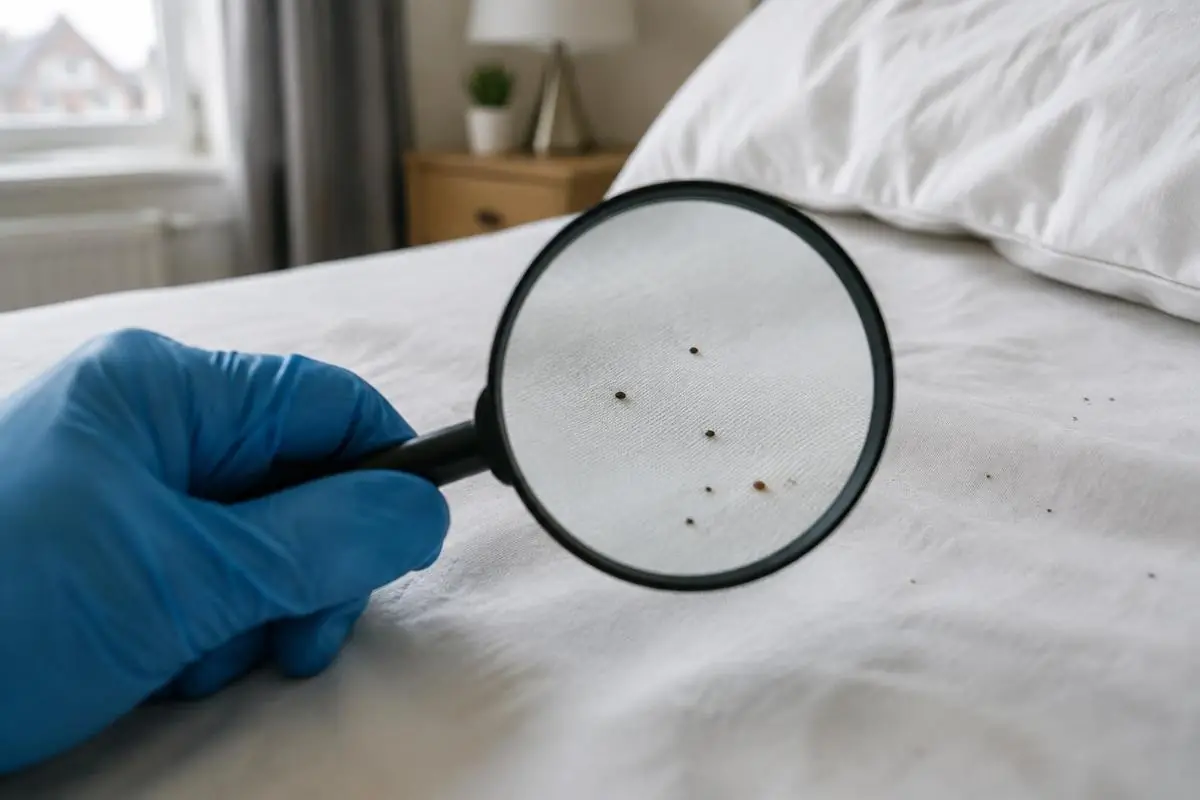
A small mark or particle on bedding is not enough to establish that bed bug eggs are present. Avoid judging it solely against a remembered internet photograph. The useful question is what supports the identification of this particular finding, rather than whether it shares one broad feature with an image you have seen.
If practical, photograph the finding where it was noticed before disturbing the area. Take a wider image showing the location as well as a closer view. Record the date and the surface involved. A blurred close-up without context may leave an assessor unable to interpret it, so ask whether further examination is needed rather than demanding certainty from the picture.
Do not describe eggs as confirmed when the only response has been “possibly”. Ask what remains unclear and what the next safe step should be. If someone proposes treatment specifically because eggs are present, request an explanation of the evidence behind that statement. This is not a reason to dismiss professional advice; it is a way to understand the basis for a significant household decision.
Nymphs: separate identification from assumptions about timing
A suspected nymph deserves the same care as a suspected egg. Its significance depends first on whether it has been identified correctly. Do not assume that any small insect near a sleeping area is an immature bed bug. Describe what you actually observed, including whether it moved, rather than adding a life-stage label prematurely.
Even where a nymph is confirmed, avoid using that single finding to calculate when the problem began. A household may understandably want to connect it to a recent visitor, a journey or a purchase. Without supporting evidence, that connection remains a possibility rather than an established explanation, and can easily lead to misplaced blame.
Ask the assessor what the finding establishes and what it cannot establish. Does it support identification, suggest a need for further checking, or change the proposed treatment scope? Keep those questions separate from “Who brought them in?” A useful inspection should guide the response to the present evidence, not supply an unsupported account of how long activity has existed or who was responsible for introducing it.
Continue the topic: Where bed bugs hide beyond the mattress
A clear view of the mattress is only a partial result
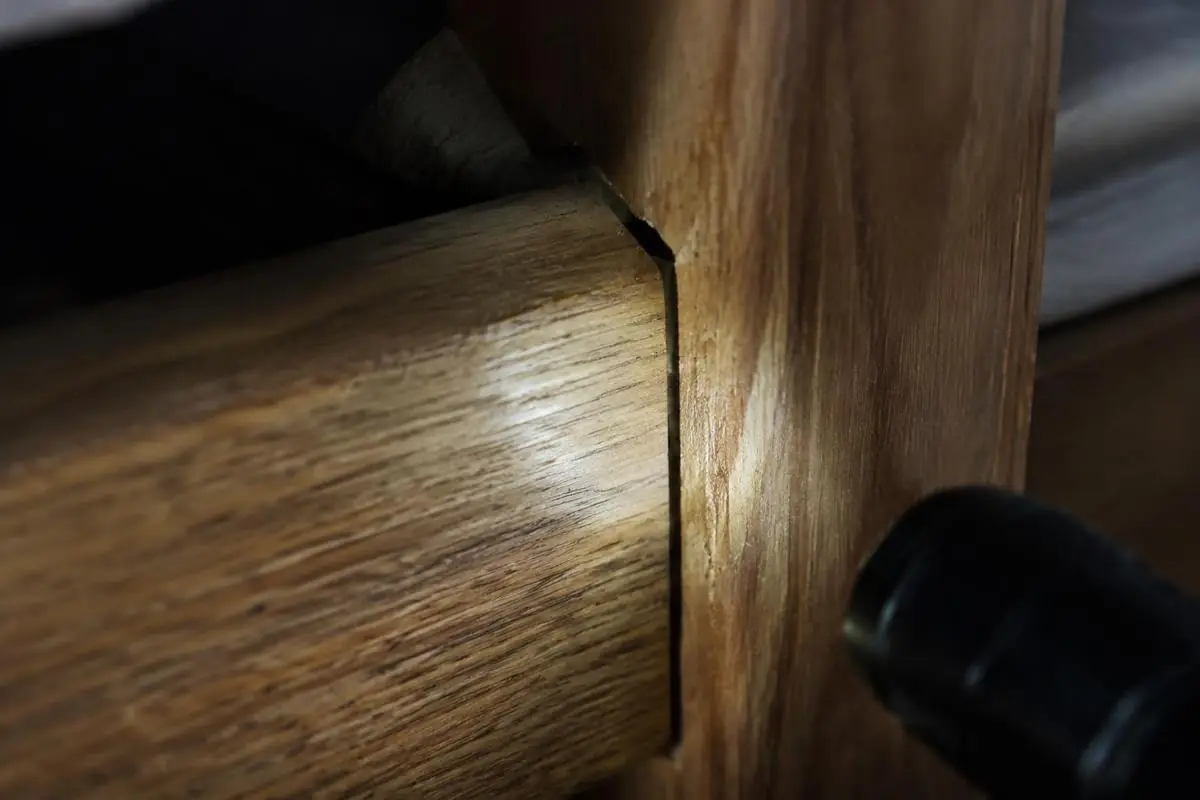
The NHS notes that bed bugs can hide in bedframes, clothing, pictures and loose wallpaper. This matters here because an inspection limited to an exposed mattress surface cannot answer questions about concealed stages elsewhere. A clean-looking surface is an observation about that surface, not evidence that every relevant part of the room has been examined.
Keep a simple distinction between areas viewed adequately, areas viewed only partly and areas not checked. You do not need to dismantle the room to make that record useful. If a fitting or piece of furniture cannot be examined safely, note the limitation and ask a professional how it should be approached.
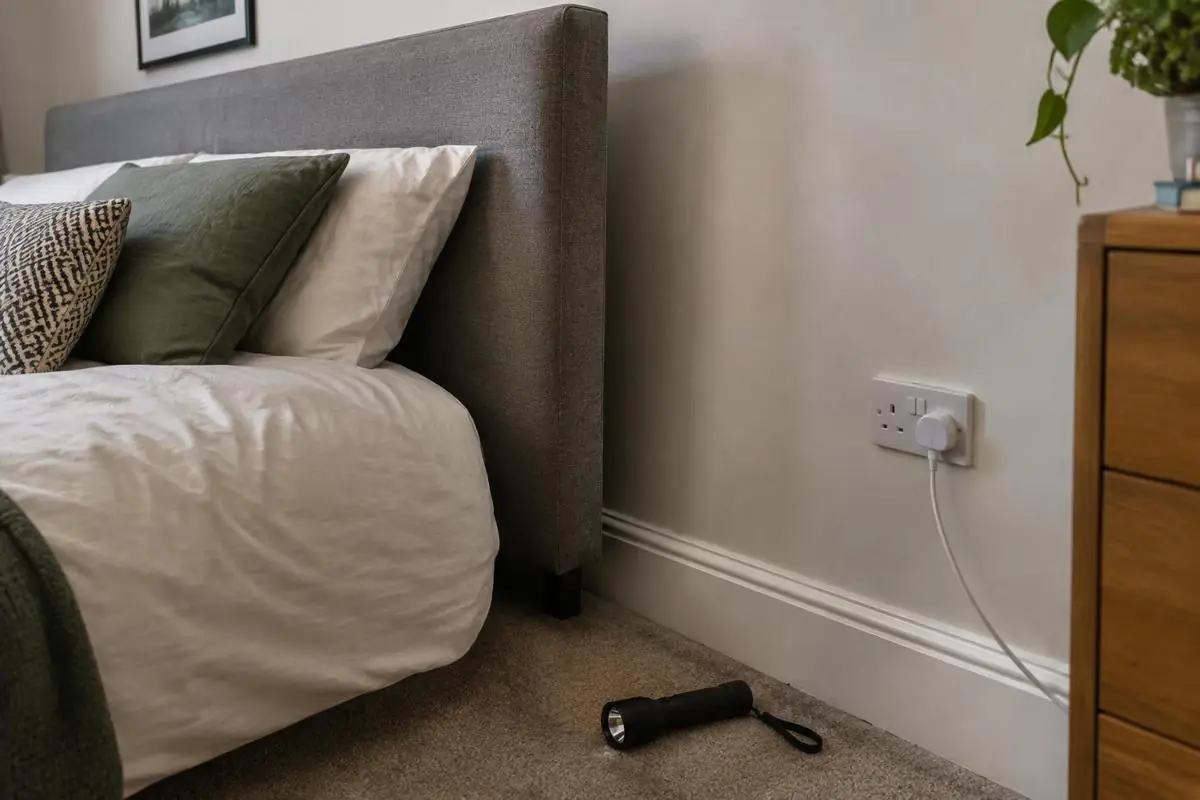
Never open sockets or disassemble appliances in an attempt to complete an inspection. The decision point is whether a gap in access needs professional assessment, not whether you can force access yourself. Ask whether an inspection report will identify inaccessible areas explicitly. That makes “nothing found” much more informative by showing the boundaries of the search, rather than allowing it to sound like an unlimited assurance.
What “no evidence found” can reasonably mean
A negative visual inspection can be useful without being conclusive. Its meaning depends on the scope of the inspection, the access available and the evidence that prompted it. “No bed bugs seen during this check” is a narrower and more defensible statement than “there are definitely no bed bugs anywhere in the property”.
Ask the inspector to explain the result in those terms. Which observations reduce concern, which questions remain open, and what would justify another assessment? You should not need to accept either absolute reassurance or an automatic recommendation for treatment. A careful explanation can leave uncertainty in place while still giving you a practical way forward.
If the only concern is bites, the NHS guidance is important: bites alone cannot identify bed bugs, even though bites can be grouped. Do not use an inconclusive room check to confirm a diagnosis by elimination. Instead, keep the skin concern and the search for insect evidence distinct. Ask what additional physical evidence would change the inspection advice, rather than repeatedly treating an absence of visible insects as proof in either direction.
Keep an evidence record without turning the home upside down
For this purpose, a useful record is brief: date, exact location, what was noticed and whether identification is confirmed or pending. Attach photographs where available. Separate direct observations from interpretations, such as “small object beside the bedframe” and “possible egg”. That distinction helps another household member or assessor understand the evidence without inheriting your initial assumption.
Agree who will keep the record and who will contact the assessor. If several people are checking independently, ask them to use the same wording for uncertain findings. This reduces conflicting accounts and makes it easier to explain whether a photograph shows a new observation or the same object already discussed earlier.
Avoid carrying a suspect item through the home simply to show everyone. Ask how any item needing examination should be contained or presented. The EPA emphasises that care and containment matter in bed bug control. An evidence record is meant to support a measured response, not encourage repeated handling, unnecessary transfers between rooms or a wholesale clear-out before anyone has established what the finding is.
For a property-specific assessment, see our bed bug heat treatment in Kent. Share your postcode and property details so the team can confirm coverage and availability.
Questions that make an inspection recommendation testable
Before agreeing to the next step, ask: “Which findings are confirmed bed bugs, which stages have you identified, and which observations remain uncertain?” A useful answer need not include every stage. What matters is that the recommendation does not imply eggs or nymphs were seen when the evidence actually concerns an adult or an unidentified trace.
Next ask how the inspection limits affect the proposed response. “What could not be checked?” and “Would better access change your advice?” are more useful than requesting a blanket guarantee from a visual visit. If further assessment is recommended, ask what question it is intended to resolve and how you should prepare without moving suspect belongings unnecessarily.
Finally, ask why treatment, further inspection or monitoring is the proportionate next step for your particular evidence. Request a clear account of the proposed scope and any uncertainty that remains. You are not asking the assessor to predict every outcome; you are asking them to connect their recommendation to what was found, what was not found and what could not safely be examined.
Treatment must address hidden stages, not just visible insects
An inspection and a treatment plan answer different questions. The inspection describes evidence and limitations; the treatment plan explains how the proposed process will address the assessed problem, including concealed stages. Seeing an insect removed is therefore not, on its own, a demonstration that the wider problem has been resolved or that no eggs remain.
If heat is proposed, ask how the professional process will be monitored and how the assessment accounts for areas that were difficult to inspect. EPA guidance supports professionally monitored heat and warns that household heating is not reliable. These are US technical references, not statements of UK law, but the distinction between controlled treatment and improvised heating is relevant.
Do not attempt a space-heater treatment or assume that warming a room substitutes for a professional process. Nor should a recommendation for heat be explained by claiming that chemical treatments never work. Ask for the reasons the proposed method suits your property and evidence, together with its limitations. No treatment discussion should turn the difficulty of finding hidden stages into a promise that professional heat cannot fail.
Related practical reading: Hotel room bed bug checks without the panic
Avoid counting down to certainty
Households often want a fixed answer to “How long until we know?” That question should not be answered with an unsupported egg-hatching countdown or survival deadline. The supplied guidance does not establish a universal timetable for declaring a property clear, and a visual inspection cannot create one merely by finding no obvious insects.
Similarly, cleaning an area does not prove that every relevant stage has been removed. Record what was cleaned or moved so an assessor understands how the scene has changed. Cleaning can be part of household care, but it cannot alone guarantee removal. Avoid treating an empty vacuumed seam or freshly changed bedding as a complete answer.
Agree what subsequent evidence would prompt contact and who should receive it, rather than repeatedly searching for reassurance without a decision rule. If a new suspected egg or nymph appears after treatment, report the date, location and uncertainty instead of immediately declaring either failure or harmless debris. Detailed aftercare belongs in the monitoring plan; the inspection lesson is to preserve useful information and avoid conclusions that outrun it.
Your next enquiry: evidence, inspection limits and written scope
Start your enquiry with a concise account of what was found, whether identification is confirmed and which areas remain inaccessible. Ask whether the evidence warrants an inspection or another assessment step. For a Kent service enquiry, give the property location without assuming that the location itself tells the assessor anything about the likelihood of bed bugs.
Bed Bug Heat Control UK can be contacted on 0800 274 0156 or info@bedbugheatcontroluk.co.uk, from 7am–10pm Monday–Sunday. Its chemical-free, controlled professional heat treatment operates at 60–65°C, with a single-day process subject to property assessment. Ask how the proposed scope addresses concealed stages in your property rather than treating the stated temperature as a household instruction or a standalone assurance.
A quote is property-specific, and an enquiry is not a booking. Before deciding, request the treatment scope, preparation requirements and inspection limitations in clear terms. The company offers a three-month written guarantee, with full coverage and conditions explained before booking. Read those terms alongside the proposed response to any later finding, so your next step rests on documented evidence and an understood plan.
Sources & further guidance
General information, not a diagnosis, medical advice or legal advice. Research and US EPA references provide technical background, not UK law, and do not endorse our company. Your property assessment and the team’s written preparation instructions take priority.