In the modern age of pest management, homeowners in England and Wales are increasingly searching for non-invasive ways to identify hidden infestations. Thermal imaging technology is frequently suggested as a futuristic solution for spotting pests behind walls or within furniture. While these cameras are invaluable tools for electricians or building surveyors, their efficacy in the world of entomology is often misunderstood. Bed bugs are masters of concealment, tucking themselves into the tightest crevices where they remain dormant for long periods. This guide examines the biological reasons why infrared cameras usually fail to find these insects, while also explaining how professional heat treatment specialists at Bed Bug Heat Control UK (0800 274 0156) use thermal monitoring to ensure the successful eradication of an infestation.
The Science of Thermography and Insect Biology
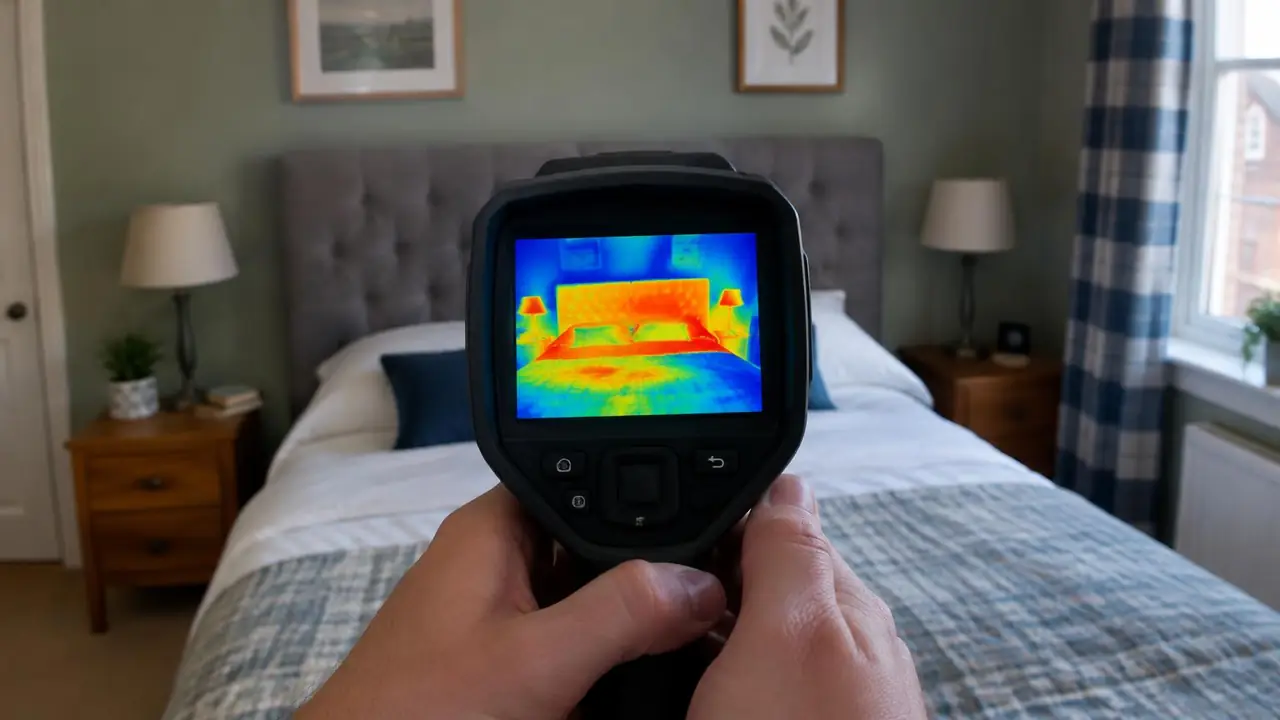
Thermal imaging cameras work by detecting infrared radiation, which we perceive as heat. Every object with a temperature above absolute zero emits some level of infrared energy. These devices translate that energy into a visual map of temperature gradients, allowing users to see heat signatures that are invisible to the naked eye. In pest control, this is highly effective for detecting warm-blooded mammals like rodents or squirrels nesting in lofts, as their body heat creates a distinct 'hot spot' against the cooler building materials.
However, bed bugs are ectothermic organisms, commonly known as cold-blooded. This means their body temperature is regulated by the environment around them rather than an internal metabolic process. If a bed bug is resting against a mattress that is 18 degrees Celsius, the insect itself will be roughly 18 degrees Celsius. Because there is no temperature differential between the bug and its surroundings, a thermal camera cannot 'see' the insect. The bug effectively possesses a form of thermal camouflage that renders it invisible to standard infrared equipment.
Even in instances where a bed bug has recently fed on warm human blood, the thermal signature is negligible. The tiny volume of liquid quickly dissipates its heat into the insect’s body and the surrounding air. For a camera to pick up a signature, there typically needs to be a significant temperature contrast. Since bed bugs do not generate their own heat and are remarkably small, they do not produce the thermal footprint required for a camera to distinguish them from a wooden bed frame or a plasterboard wall.
Comparison with Other Heat-Generating Pests
It is often confusing for property owners to hear that thermal imaging works for some insects but not for bed bugs. The distinction lies in social behaviour and sheer biomass. Pests such as honeybees, certain species of wasps, and large subterranean termite colonies are known to generate detectable heat. In these cases, the collective activity or the insulating properties of a massive nest create a localized increase in temperature. A large wasp nest in a wall cavity, for example, can be several degrees warmer than the rest of the wall.
Bed bugs do not exhibit this collective heat-generating behaviour. While they are gregarious and tend to cluster together in harbourages, they do not build structures or vibrate their wing muscles to create warmth. A cluster of fifty bed bugs behind a skirting board still lacks the mass to alter the thermal profile of the wood or masonry. Consequently, a technician scanning a room with a thermal camera will likely see a uniform temperature across the wall, even if hundreds of insects are hiding just millimetres beneath the surface.
Some may claim that advanced high-resolution cameras can spot the tiny heat signature of a single insect, but this is rarely applicable in real-world residential settings. The sensitivity required to pick up such a minute difference would also pick up every minor draft, screw head, and structural variation in the room, leading to a high rate of false positives. Relying on this technology for detection can lead to a false sense of security, allowing an infestation to grow unchecked because the camera failed to find the 'hidden' heat.
The Role of Thermal Technology in Treatment
While thermal imaging is an unreliable tool for finding bed bugs, it is an essential component of a professional heat treatment process. At Bed Bug Heat Control UK, we use thermal imaging cameras during our chemical-free treatments to ensure every part of a room reaches the required lethal temperature. Instead of looking for the bugs, we are looking for 'cold spots' in the room—areas where the heat may not be penetrating effectively, such as the inside of a heavy wardrobe or underneath floorboards.
During a heat treatment, the air temperature is raised to a level that is lethal to all life stages of the bed bug, including the eggs. However, furniture and structural elements absorb heat at different rates. A thermal scan during this process allows our technicians to identify if a particular corner of the room is lagging behind. By identifying these cooler zones, we can reposition our high-output heaters and air movers to ensure the thermal energy is distributed evenly, leaving no safe haven for the insects.
This application of technology is scientific and data-driven. It moves the focus away from the impossible task of 'seeing' a cold-blooded insect and onto the measurable task of ensuring the environment is sufficiently hot. This is why professional heat treatment is often preferred over chemical applications; it relies on the physical laws of thermodynamics to reach into every crack and crevice that a spray or a visual inspection might miss, checked throughout with thermal imaging cameras.
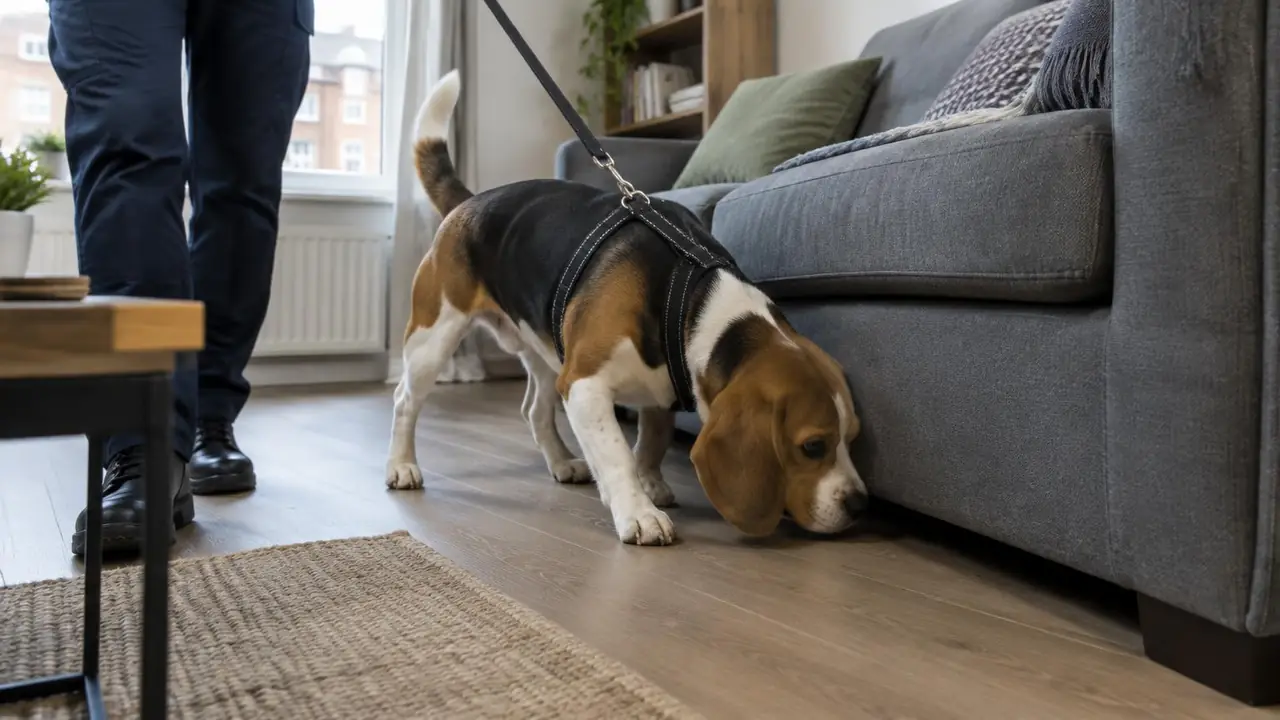
Continue the topic: How sniffer dogs are used to detect bed bugs
Visual Inspection: The Gold Standard
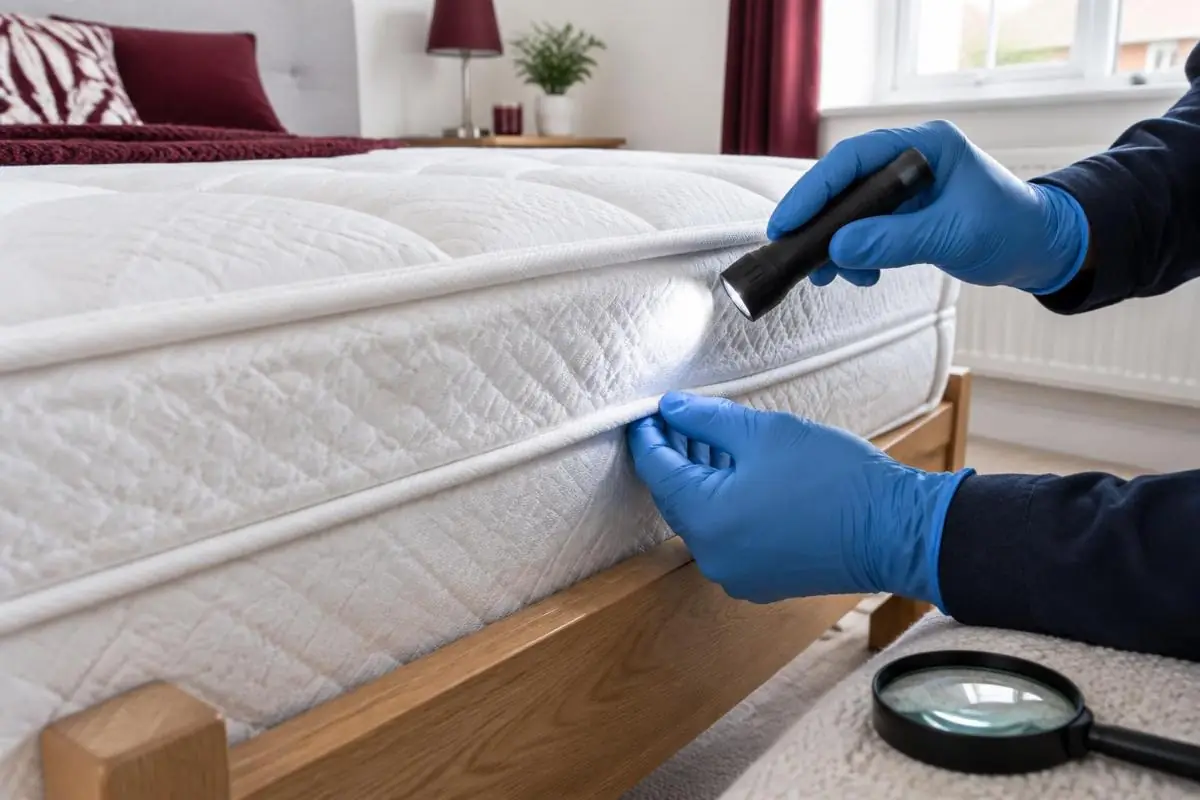
Because gadgets often fail to provide the full picture, a thorough visual inspection remains the most reliable method for detecting bed bugs. This requires a keen eye and an understanding of bed bug biology. Professionals look for more than just the live insects; they search for the evidence left behind. This includes cast skins (exuviae) shed during the molting process, tiny white eggs tucked into seams, and the characteristic dark spotting of faecal matter which often looks like small ink dots on fabric or wood.
The search begins at the primary 'hot zone'—the bed. This involves checking the piping of the mattress, the folds of the box spring, and every joint of the bed frame. Bed bugs are thigmotactic, meaning they prefer to be in tight spaces where their bodies are in contact with surfaces on both sides. This makes them incredibly difficult to spot with a casual glance or a camera, as they are often squeezed into gaps no thicker than a credit card. A professional assessment is often necessary to determine the extent of the spread.
Beyond the bed, inspectors will examine bedside furniture, electrical outlets, and even the backing of framed pictures. In many cases, what appears to be a clear room can actually be harbouring a significant population just out of sight. If you suspect an issue, it is vital to avoid disturbing the area too much before a professional arrives, as this can cause the bugs to scatter into more difficult-to-reach locations throughout the property.
Common Misconceptions and DIY Pitfalls
The market is flooded with DIY gadgets promising easy detection of pests, ranging from ultrasonic plug-in devices to smartphone thermal attachments. It is important for consumers in England and Wales to remain cautious. Many of these products are not backed by entomological research and can lead to wasted money and delayed treatment. Bed bugs are exceptionally resilient, and attempting to solve the problem with unproven technology often allows the population to multiply into neighbouring rooms.
One of the biggest risks of using ineffective detection tools is the 'false negative.' If a homeowner uses a thermal camera and sees nothing, they may assume their itchy welts are caused by something else, like a skin condition or spiders. This delay in seeking professional help is exactly what bed bugs need to establish a deep-seated infestation. Early intervention is the key to a swift resolution, and that intervention should be based on physical evidence rather than a digital screen.
Similarly, DIY heat attempts using domestic heaters or hair dryers are dangerous and ineffective. These methods rarely reach the sustained temperatures needed to kill eggs and often lack the airflow required to penetrate furniture. Furthermore, they do not include the sophisticated thermal monitoring equipment used by professionals to protect the property and ensure total eradication. For those preparing for a professional visit, we recommend strictly following the official preparation checklist found on our website.
Identifying Bed Bug Bites and Reactions
Since you cannot rely on a thermal camera to find the bugs, you must often rely on the physical symptoms they leave behind. Bed bug bites are often the first sign of an issue, typically appearing as small, red, itchy bumps. These bites frequently occur in lines or clusters, often referred to as 'breakfast, lunch, and dinner,' as the insect may pierce the skin several times to find a suitable blood vessel. They are most common on areas of the body exposed during sleep, such as arms, shoulders, and the neck.
It is important to note that reactions to bites vary significantly between individuals. Some people may develop large, itchy wheals, while others may have no visible reaction at all. This lack of reaction can be problematic, as one person in a shared bed might be getting bitten repeatedly without knowing it, while their partner suffers intensely. Because bites can look similar to those of mosquitoes or fleas, they are not a definitive proof of bed bugs on their own; they are merely a signal to conduct a deeper search.
If you wake up with unexplained marks, the next step should be a meticulous check of your bedding. Look for small, rust-coloured blood spots on the sheets, which can occur if a bug is accidentally crushed after feeding. Also, check for the dark faecal spots mentioned earlier. If you find these signs alongside bites, it is highly likely that an infestation is present. At this stage, contacting a specialist for a professional assessment is the most prudent course of action to prevent further spread.
For a property-specific assessment, see our bed bug heat treatment in Northamptonshire. Share your postcode and property details so the team can confirm coverage and availability.
Why Chemical-Free Heat is the Preferred Solution
Once an infestation is confirmed through visual evidence, the choice of treatment is paramount. Traditional chemical treatments have faced challenges in recent years due to bed bugs developing resistance to many common insecticides. This resistance means that even thorough spraying may not eliminate every bug, particularly those hidden deep within wall voids. Chemical-free heat treatment, however, bypasses the issue of resistance entirely by using physics to denature the proteins within the insect.
Heat is a holistic solution. It penetrates into the core of mattresses, sofas, and even inside electronic devices where chemicals cannot safely be used. Because bed bugs cannot survive temperatures above 50 degrees Celsius for an extended period, the process is incredibly effective when managed by experts. Checking with thermal imaging cameras during this process helps ensure that every cubic centimetre of the target area reaches the 'kill zone,' providing a comprehensive result in a single day of treatment.
Furthermore, heat treatment is a discrete and environmentally conscious choice. There is no lingering chemical residue, meaning rooms can often be reoccupied shortly after the temperature has returned to normal. For families with children, pets, or those with respiratory sensitivities, the absence of harsh fumes is a significant benefit. This method aligns with modern pest management standards that prioritize efficacy alongside safety and environmental responsibility.
The Importance of Professional Assessment
The complexities of bed bug behaviour mean that a professional assessment is often the most cost-effective first step. A trained technician understands where to look and can differentiate between bed bugs and other similar-looking pests like carpet beetles or booklice. They have the experience to judge the severity of the infestation, which dictates the logistics of the heat treatment. This assessment ensures that the treatment plan is tailored to the specific layout and contents of your home.
During an assessment, a specialist can also identify potential 'bridge' points—routes the bugs might use to move between rooms, such as through pipework or shared walls in flats. Understanding these pathways is crucial for containing the problem. While a thermal camera might show a heat leak in a window, a professional inspector sees the tiny gap in a skirting board that serves as a highway for pests. This human expertise cannot be replaced by a piece of hardware.
We encourage residents across England and Wales to reach out for advice if they are unsure. Our team is available from 7am to 10pm daily on 0800 274 0156 to discuss your concerns. Whether you are a homeowner, a landlord, or a business owner, getting an accurate diagnosis is the only way to ensure the correct protocols are put in place. Attempting to diagnose the problem yourself with unverified tools often leads to more frustration and higher costs in the long run.
Related practical reading: How to spot bed bugs: a careful home inspection guide
Preparing Your Property for Success
If a heat treatment is scheduled, the success of the operation depends heavily on the preparation of the property. While the heat is powerful, it must be able to circulate freely to reach every hidden insect. This is where the homeowner plays a vital role. Proper preparation ensures that there are no 'thermal shadows' where bugs could potentially survive. However, this doesn't mean you should start moving furniture or throwing away belongings before receiving instructions.
Moving items from an infested room to a clean one is one of the most common ways infestations spread. It is essential to keep items within the treatment area unless otherwise directed. To help our clients, we provide a detailed official preparation checklist on our website. This document outlines exactly what needs to be done, from managing laundry to protecting heat-sensitive items like wax candles or pressurized canisters. Following these steps carefully is the best way to support the effectiveness of the professional treatment.
Our technicians will also guide you through the process on the day. They use their thermal monitoring equipment to constantly adjust the setup, ensuring that items like cluttered wardrobes are handled correctly. By combining your preparation with our advanced heating technology and monitoring, we can achieve a thorough result. The goal is always to create a lethal environment for the pests while maintaining the integrity and safety of your home and its contents.
Long-Term Management and Peace of Mind
After a successful heat treatment, the focus shifts to preventing a reintroduction of the pests. Bed bugs are hitchhikers; they usually enter homes via luggage, second-hand furniture, or visitors. Being aware of the signs of bed bugs and maintaining a clutter-free environment around sleeping areas can make future detections much easier. While no home is completely immune, being vigilant about where you place your bags when travelling can significantly reduce the risk of bringing unwanted guests home.
It is also worth noting that because heat kills the eggs, the cycle of infestation is broken immediately. Unlike some chemical treatments that require multiple visits to catch newly hatched nymphs, a correctly executed heat treatment is a 'one and done' solution for the existing population. This provides immediate peace of mind for those who have been suffering from bites. Using thermal technology to verify the heat distribution is our way of ensuring that this high standard is met every time.
In conclusion, while thermal imaging is not a 'magic wand' for finding bed bugs, it remains a vital part of the professional's toolkit when used correctly for temperature monitoring. Do not be swayed by claims of easy detection using infrared cameras or other gadgets. Trust in visual evidence, professional expertise, and the proven power of heat. If you suspect you have an issue, contact Bed Bug Heat Control UK today to discuss how we can help you reclaim your home using our specialist, chemical-free methods.
Sources & further guidance
General information, not a diagnosis, medical advice or legal advice. Research and US EPA references provide technical background, not UK law, and do not endorse our company. Your property assessment and the team’s written preparation instructions take priority.